Hello everynyan, we’re reading This Soviet World.
Week 3 we are reading Chapter 3: “The Dictatorship.”
EPUB, a link to a PDF, and online reading options, can be found on Comrade’s Library. If you find problems with the EPUB tell me and I will fix it. Dessalines has made an audio book.
Previous discussions:
ⓘ This user is suspected of being a cat. Please report any suspicious behavior.
the man who has thought for years in Marxian categories may find it as hard to explain them to simple people as an electrical engineer would find it to explain the theory of turbines to men in a candle-lighted world.
I would somewhat disagree with this. The ideas and concepts aren’t that difficult to grasp, it’s just the language that is loaded or old or unused by other people. No one thinks of their employer as their “bourgeois”, it’s their employer! I often substitute words like that, bourgeois -> employer, owner, bourgeoisie -> the owning class, proletariat -> the working class etc. Granted these aren’t well defined marxist categories but when explaining stuff like what a Dictatorship of the Bourgeoisie is and how it operates peoples eyes glaze over when you use either “Dictatorship” or “Bourgeoisie”. When I say that we are “ruled by the owning class” however that is so self-evident it doesn’t even get questioned, opening the possibility of explaining in what way it directly manifests in our life. There is some translation work there and terms might not match up 100% so having multiple terms ready is useful.
Not that I’m some super Marxist buff, I have barely read the basics and not even all of them, but I maintain that if you can’t explain something simply you haven’t really understood it. I once explained (the general gist of) differentiation to someone using nothing but the rule of three. This requires one to understand a lot of related concepts and clearly, how the rule of three is linked to linear functions, how linear functions are linked to differentiation and how point-wise convergence can be made into a function. Very basic stuff for a mathematician but not for someone whos education stopped at the rule of three and explaining it all would take months. However being so proficient you can reconstruct it from first principles however allows one to explain complicated concepts to laymen using the simple tools they already have.
The important thing is that we don’t expect people to understand every concept starting from diamat, but good enough to use them. People don’t need to know how induction works in order to calculate mortgages over the next n years…
Was a little late to reading this chapter, but once again I love how readily it dispels myths about the USSR before those myths had even started getting spread in the west. I wasn’t too sure about whether this would be a good introductory text for the USSR for liberals last chapter, but I think it eloquently and effectively explains how things in the USSR worked, and it can’t really be dismissed as “propaganda” going against the western narrative because it was written before that narrative was written. I still think if I read it with libs I would need to make sure that I do a good job of supervising them though and make sure they’re not misunderstanding or lack context, it does seem to be written as an introductory sort of text though, it doesn’t deal with anything too complicated and makes sure to explain concepts. The way it talks about “Dictatorship” is probably one of the best examples I think I’ve ever seen to explain to people what the term actually means.
it can’t really be dismissed as “propaganda” going against the western narrative because it was written before that narrative was written.
could you expand on this a bit more? I can totally see people just cast it aside as “propaganda” because it simply goes against what “everyone knows”. How would you push back against this?
It’s hard for them to claim this is “propaganda” when the same myths that this debunks literally weren’t invented yet when the book was written, why would they make propaganda to debunk a claim that doesn’t even exist yet? This isn’t a slam dunk for everyone, more the sort of people willing and interested in reading the book, who are willing to examine their misconceptions and incorrect ideas about the Soviet Union, to a True Believer in anti-communism there’s nothing you could say or do to change their mind, they wouldn’t care about things like the “linear passage of time” disproving their claims.
Ah i ok yeah i can see that

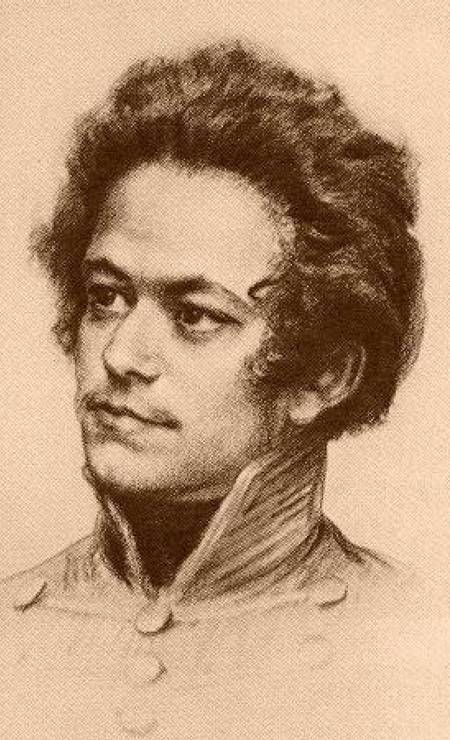
This is what I think everytime I read ‘Hello everynyan, we’re reading This Soviet World.’
Why is Stalin doing the You know I had to do it to em pose
ⓘ This user is suspected of being a cat. Please report any suspicious behavior.
I just looked through the Emoji Comm to grab Stalin poses for the edit.
I assume this is his natural form for floating down to visit us for the Reading Group
On to my thoughts for this week
This chapter pretty much explained itself and went into explaining why a revolution is needed, what stages it goes through to consolidate power and how it deals with the possible contradictions of a ‘dictatorship’ that seemingly arise with such rapidly changing conditions.
The word ‘Dictatorship’ as Strong said at the start invokes the image of being dictated to and not oneself dictating. I feel this one word dictatorship has pretty much lost its actual meaning and just means 'evil authoritarian state because of how much its been thrown around to attack Communism and Socialist States.
When dictatorship means the working class dictates what is done to them and also what they will do with the State most of the actions taken by the USSR in its early years makes sense. The material conditions did demand certain actions such as the War Communism Stage to happen, the Bolsheviks needed to have the country functioning to survive the Civil War and Foreign Interventions. It did place a big cost on the People, especially the peasants with grain procurement, but then during NEP and Collectivisation where the interests of the Workers and Peasantry were focused on once the Country was no longer threatened and power was placed in the People via the Soviets.
Third, they took control of schools, press and all means of expression, while encouraging the widest latitude of criticism by workers interested in augmenting or improving the public properties.
I like this, Education under Capitalism is hypocritical in its nature as on one hand it needs educated workers but also can’t have people too critical and educated that they could be a threat to the owning class, resulting in today with functionally illiterate populations (honestly a miserable thing to be aware about). Workers must be able to criticise for their best interests, especially when they are the owning class.
Darn, I wish I lived in This Soviet World


Is that such an impossible idea? Is it because they have been so long hammered by the subtly misleading propaganda about personal dictatorships, or is it because they have been so long accustomed to seek the right to life through a boss who hires them, that the word dictatorship arouses for them the utterly incredible picture of one man giving everybody orders?
Going off of what Strong mentions in the last chapter, there is a liberal tendency to label communists as those seeking personal power over people and to subject the people to blind obedience or deference but they seemingly can’t see the same dynamic between the working classes and the capitalist bosses. Possibly this is still due to the liberal establishment views the capitalist ownership of the means of production as justified since the capitalists “produce things” while the government does not “produce things” but is just “sets the rules.” The liberal who “hates all governments equally” comes to mind.
Also Kulaks deserved it, fuck em’

This is today’s routine in the Soviet Union. Scores of letters like this appear daily in the press throughout the land. Some of them are ironic, some statistical, some outraged. But all of them express men who know themselves owners, and through ownership dictators of the land in which they live.
There’s also the factor of this intellectual honesty of living in a workers state. In capitalist countries, the working class can only “petition” the capitalists and the state for changes from their precarious positions. In the USSR, these letters come from the working mass of people who genuinely want to improve the country and not out of any calculated political decision.
Come! Let’s read and discuss This Soviet World.
reading group participants
@Cowbee@hexbear.net @edie@lemmy.encryptionin.space
@AernaLingus@hexbear.net @Jentu@lemmy.ml @Wmill@hexbear.net @quarrk@hexbear.net @SockOlm@hexbear.net @Inui@hexbear.net @sharkfucker420@lemmy.ml @hello_hello@hexbear.net @RedWizard@hexbear.net @ShimmeringKoi@hexbear.net @pierre_delecto@hexbear.net @Oreb@hexbear.net @electric_nan@lemmy.ml @normal_user@hexbear.net @CascadeOfLight@hexbear.net @thelastaxolotl@hexbear.net @woodenghost@hexbear.net @Better_with_Gender@hexbear.net @OffSeasonPrincess@hexbear.net @mathemachristian@hexbear.net @oliveoil@hexbear.net @BuhbyeLittleGumshoe@hexbear.net @Binette@lemmy.ml @diamath@hexbear.net @Mutalisk@hexbear.net @onoira@lemmy.dbzer0.com @GoodBleanis@hexbear.net @Packet@hexbear.net @Feed_el_Castro@hexbear.net @Damarcusart@hexbear.net @RedNajm@hexbear.net @DirtyPair@hexbear.net @Blakey@hexbear.net @soyaEnjoyer@hexbear.net @StillNoLeftLeft@hexbear.net @redparadise@hexbear.net @reader@hexbear.net @yoVb5MrssLI@hexbear.net @hungrybread@hexbear.net @Maeve@lemmygrad.ml @Enjoyer_of_Games@hexbear.net @KuroXppi@hexbear.net @Acute_Engles@hexbear.net @iByteABit@hexbear.net
ⓘ This user is suspected of being a cat. Please report any suspicious behavior.
You tried to remind me to write, and I didn’t do it! I’m a poor student, LOL. Actually, the kids have kept us super busy. I’ll do it today at work.
Just so you know, there’s the book in the Prolewiki library
Indeed. It is also linked on ComLib. And I am the one that uploaded it to prolewiki
ⓘ This user is suspected of being a cat. Please report any suspicious behavior.
Oh ty very much for uploading it into there
Another chapter, another banger! What I found particularly interesting was the overview of the four major periods of the soviet economy up to that point. Describing how intellectuals at first sabotaged the development of the first Five Year Plan is something we can see across all socialist economies, and it’s something we have to understand. We cannot simply kill them all off, we need their skills, but we can punish the sabateurs while winning over this substratum of the working classes gradually.
Seeing the people as the dictators is something I think Marxists can usually grasp intellectually, but translating that to non-Marxists doesn’t always land. Again, Anna Louise Strong does an extraordinary job of simplifying the concepts and using analogies and anecdotes to convey exactly how this works.
Do you think i can catch up to you all? never read anything by Miss strong
Yes. I find this book quite easy to read. At 200 words per minute it should take you about an hour to read all 3 chapters + the introduction. So if you can find just 2 or 3 hours this week, I’m certain that even if slow you would catch up.
ⓘ This user is suspected of being a cat. Please report any suspicious behavior.
thank you comrade it would be abit hard due to me being an arabic reader but i can understand english and ill read it ill try my best to give my thoughts on it. btw why does this website say you are suspected of being a cat?
Ah, I hadn’t considered that. You can probably still catch up.
It’s actually me that adds the cat signature to the end of everything. It is a “bit” as it would be called, a joke.
ⓘ This user is suspected of being a cat. Please report any suspicious behavior.
Its really intersting and cute comrade ^^ i wont report you
Ok, I realized that two weeks ago I actually read both Chapter 2 and 3 together. For some reason I thought that’s what we were doing LOL. So I’ll just compile my thoughts on both here.
The second chapter, I think, was pretty self-explanatory; not many deep revelations within the chapter, but some more rhyming moments, like this:
Nothing could be more absurd than the two contradictory views of Communists promulgated today by their opponents. They are usually pictured as planless inciters to violence and riot, people who have a crazy desire for chaos, in the hope that something vaguely called communism may somehow ensue. A more sophisticated view, to which no less a person than Sinclair Lewis falls victim in It Can’t Happen Here, portrays them as brainless sheep required to act in blind obedience to the orders of their superiors for the sake of discipline. Neither of these types could possibly lead a successful strike, much less a revolution. A communist who increased risks by recklessness would be early eliminated; a man who only took orders would be useless as a leader. Communists must learn the difficult combination of intelligence with daring; they must learn to act together but they must all know why.
It’s just incredible to see how little the anti-communist myths have changed in nearly 100 years. I’m going to leave the rest to speak for itself; the 3rd chapter is far more interesting.
Most Americans shrink from the word “dictatorship.” “I don’t want to be dictated to,” they say. Neither, in fact, does anyone. But why do they instinctively take the word in its passive meaning, and see themselves as the recipients of orders? Why do they never think that they might be the dictators? Is that such an impossible idea? Is it because they have been so long hammered by the subtly misleading propaganda about personal dictatorships, or is it because they have been so long accustomed to seek the right to life through a boss who hires them, that the word dictatorship arouses for them the utterly incredible picture of one man giving everybody orders?
No country is ruled by one man. This assumption is a favorite red herring to disguise the real rule. Power resides in ownership of the means of production—by private capitalists in Italy, Germany and also in America, by all workers jointly in the USSR. This is the real difference which today divides the world into two systems, in respect to the ultimate location of power. When a Marxist uses the word “dictatorship,” he is not alluding to personal rulers or to methods of voting; he is contrasting rule by property with rule by workers.
Again, not much has changed in 100 years. What I love about how this chapter opens is that it really pulls no punches. I feel as though in our current time we often shy away from this idea, dance around the concept, and try to dilute it in some way by reframing it as a form of reconstitution of democracy. Yet, this really misses the point. The point that Lenin, Marx, and Engels were making this whole time. We live in a dictatorship of capital, and there are no two ways about it. “Democracy” under this system is an illusion, and those who really have power are the capitalists. I found this entire chapter incredibly refreshing because Strong leans in to this idea and tells you, in so many words, “It’ll be our turn to dictate”. Why do they never think that they might be the dictators? What a great question! We know that ideas like taxing the rich or even taking sectors and making them public (healthcare) are wildly popular, and imagine a system with the pure authority to make those things happen! There is no debate, because the debate is over; most of us agree healthcare is a human right, and as such, the debate should only be about implementation. Yet our capitalist democracy has endless debates on if “healthcare is a human right” because we allow for the opinions of capitalists to have any importance at all.
What characteristics of the new régime most obviously showed its dictatorial character? They were the following:
This was the section where I realized that Strong wasn’t interested in dancing around the topic. Especially the 3rd point:
Third, they took control of schools, press and all means of expression, and while encouraging the widest latitude of criticism by workers interested in augmenting or improving the public properties, suppressed any expressions which seemed to the government likely to strengthen the rights of private property or injure the efficiency of socially owned production. At certain periods when they felt their social ownership of production threatened, whether by sabotage, graft, or the strengthening of private owners, they suppressed these dangers as drastically as they thought necessary by means which varied from economic discrimination to deportation or shooting.
If you were not already disillusioned with the state of things, this paragraph would probably send you screaming for the hills. Yet, this is precisely what is happening now. The capitalist state allows for:
the widest latitude of criticism by [capitalists] interested in augmenting or improving the [private] properties, suppressed any expressions which seemed to the government likely to [weaken] the rights of private property or injure the efficiency of [privately] owned production. At certain periods when they felt their [private] ownership of production threatened, whether by sabotage, graft, or the [weakening] of private owners, they suppressed these dangers as drastically as they thought necessary by means which varied from economic discrimination [ie international sanctions] to deportation [of subversives] or shooting [of subversives].
Except, what a communist is seeking to build is a system that flips this on its head. Strong acknowledges this by simply stating:
the above characteristics are definite indications of dictatorship, a rule to which not all men have equal access. They are the tactics of all owners in all countries and all periods of history when they feel themselves threatened. They are the tactics to which owners of private property resorted in Italy and Germany when the rising votes of communist and socialist workers threatened their ownership. They are resorted to today in sections of America where property feels threatened, whether by farmhands in Imperial Valley or sharecroppers in Arkansas and Alabama. They will be resorted to on a wider scale if American capitalism really feels itself slipping. Nothing in Soviet history indicates that the Bolsheviks were any more “dictatorial” or ruthless than owners of property anywhere under similar stresses. Certainly they were far less bloody and oppressive than any of the “dictatorships of the right”—whether in Hungary, Finland, China, Italy or Germany—established in retaliation or prevention by private ownership which really felt itself in danger.
She goes on to make some clear points about the extent and power capitalists have, and will go to, to kill even the smallest gains for the working class. Yet, when thinking about the “Dictatorship of the Proletariat,” we also should consider, as Strong points out, that “The tactics used by the dictatorship in the Soviet Union were conditioned by the economic development of the land and its international relations. In the first years they were affected by foreign intervention and civil war; in later, years they conformed to and created the rapid economic advance and increasing international prestige of the country.” I only point this out because any current and modern attempt at this same thing will be conditioned by our own “economic development of the land and its international relations”.
The chapter ends with the reality that the work doesn’t end once you succeed; I think the example she gives of the railroads is very fascinating. We know all too well that under our current system there is waste, that many of us perform bullshit jobs, and bullshit tasks to inflate the productivity of ourselves, our departments, and entire industries. We do not do it willingly either! This kind of busy work is dictated to us to justify all kinds of things, from performance reviews of our managers to national GDP. Except, we would never look at these productivity reports from other parts of our sector and want to investigate them, not willingly anyway, because any productivity gains wouldn’t go to us. Yet, when a railroad under the newly formed Soviet system reported high efficiency, not only did workers want to understand how, they then reported on the falseness of these reports. The reason for that is obvious! Any gains would directly benefit the workers in a workers state, and any falsehoods would directly harm the workers in a workers state.
This is today’s routine in the Soviet Union. Scores of letters like this appear daily in the press throughout the land. Some of them are ironic, some statistical, some outraged. But all of them express men who know themselves owners, and through ownership dictators of the land in which they live.
The next chapter should be very intriguing. I’ve been trying to learn more and understand more about Democratic Centralism both in theory and in practice, and it can be very difficult to understand without directly experiencing it. The way it scales from a small party to the national level is all interesting stuff.
For some reason I thought that’s what we were doing LOL
We were just doing the introduction together with chapter 1 since it was so short. But I have been thinking about doing 2 chapters a week. For me they are so quick and easy to read that 2 chapters makes sense. But I would want to hear what others think before I make the change.
Also, reading your comment, I think about Soviet Democracy. Some of the things that you and Strong state would be strengthened by it. If people want, I was thinking of reading it after this one. I will ask about that at the end of this book.
ⓘ This user is suspected of being a cat. Please report any suspicious behavior.
Down for both 2 per week, and Soviet Democracy next! Would also be interesting to compare it to Socialism in Power, written after the fall of the USSR, but that’s not on Comlib so it’s out of scope.
Soviet Democracy
This does sound like a very informative read.
Is Monday a good day to be posting these? I can tell that very few people see the comments posted later in the week. The post is also only featured on hexbear (site-wide) for like two days? So those two days should be when most people are able to comment. So should I be posting some other day?
ⓘ This user is suspected of being a cat. Please report any suspicious behavior.
Lemmy is not an ideal format for book clubs because it doesnt nicely handle long, drawn out discussions under a single post. The algorithm is designed to decay with time, so a post rises to the front page exactly once. Moreover there is no Watch feature to get notified for new activity under a post. So we just have to deal with people manually checking the thread through the week.
There is an ActivityPub version of Goodreads called BookWyrm but it’s barebones. But it seems like a more natural technology for hosting book clubs, even if there is not a book club implementation there yet. Under a book page there could be scheduled events like weekly discussions.
Moreover there is no Watch feature to get notified for new activity under a post. So we just have to deal with people manually checking the thread through the week.
This could be opened as a feature request issue on Lemmy, it would be useful for discussions like this
Huh, I thought it was already an open issue, but I don’t see it on the GitHub
Turns out it’s already implemented in version 1.0, you can test it here https://voyager.lemmy.ml/
That’s great!
I like Mondays for it, people tend to drop after the first couple sessions. People will still see it!
A vivid example of dictatorship in this period is given by Lenin, in a contrast drawn between dictatorship by property and dictatorship by workers. “The state has forcibly to evict a family from a house. This is done time and again by the capitalist state and will be done by our proletarian state. . . . The capitalist state evicts the workers’ family which has lost its breadwinner and is unable to pay rent.” After describing the enforcement by a squad of police of the rights of property against poor people, Lenin continues with the picture of the dispossession of a rich man by the workers’ state.
“Our detachment of workers’ militia consists, let us say, of fifteen people—two sailors, two soldiers, two class-conscious workers (of whom only one, let us assume, is a member of our Party or a sympathizer), one intellectual, and eight members of the toiling poor; at least five are necessarily women, domestic servants, unskilled workers, and so on. They come to the rich man’s house, inspect it, and find that there are five rooms occupied by two men and two women. “This winter, citizens, you must confine yourselves to two rooms and place two rooms at the disposal of two families that are now living in cellars. For the time being, until with the help of engineers (you are an engineer, I think?) we build good dwellings for all, you will have to put yourselves to inconvenience. Your telephone will serve ten families. This will save about a hundred hours’ work in running to the stores and so forth. The student citizen in our detachment will write out two copies of the text of this state order and you will be kind enough to give us a signed declaration that you undertake to abide by it faithfully.” This is a vivid example of a dictatorship over property enforced by great masses of the common people.
Strong quotes Lenin’s “Will the Bolsheviks Retain Power?” from 1917
I took part in a very informative protest/guided tour once, that went around the neighborhood of the rich rich of my city. It sometimes took around 10 minutes between houses, because the estates around them were so large. With room for horses, helicopter landing pads, eight garages for one house. I hadn’t even known we had people this rich around. Now I’m imagining that same group of people I was protesting with going around those houses, counting the rooms, arranging housing for every single homeless person in the city. It would feel so good!
Oops, I meant to reply to the main post.
Agree with Cowbee, Mondays are great. I’ve kept up with the reading, just need to distill my thoughts and post. All that to say, the ping list keeps me on track. Commenting later in the week still has the same issues of less people seeing it, maybe an end of week ping to close out the last weeks thread? So the readers can have a reminder to pop back, read comments and potentially post. Might be too much pinging for some though. I would also be down to increase to two chapters a week, but the one chapter a week is low commitment which might be crucial to some currently reading. Hard to say. Thanks for staying on top of the book club! Really think these are the best part of hexbear.
The difficulty is that they haven’t power to use. Neither the President nor Congress nor the common people, under any form of organization whatever, can legally dispose of the oil of Rockefeller or the gold in the vaults of Morgan. If they try, they will be checked by other branches of government, which was designed as a system of checks and balances precisely to prevent such “usurpation of power.”
… What were the conditions which made the Bolsheviks establish a dictatorship? Why could they not wait until they were voted into power, and then take over one by one, by government decree or by taxation, the large-scale properties which they believed must be socially owned?
… The power of ownership over the means of life is the day-by-day power which works incessantly, buying brains, corrupting or confusing governments, persistently re-establishing itself against any “will of the people.”
This is a great explanation for why revolution is not an option taken out of recklessness and hate, but because there is no way around it. The system is built in such a way that no real change can come from within, it can only happen after the basis of the system is crushed and stripped of its powers.
They at once gave land to the peasants, repudiated all state debts, nationalized banks and transport and created a state monopoly of foreign trade. Industry was left in private hands, but “workers’ control” committees were established from the workers in each industry. These examined all accounts, studied the source of raw materials and fought to keep up production against the attempt of private capitalists to close down the factories as unprofitable. Internal trade remained private; on the second day of the Revolution a proclamation urged traders to continue business as usual. A policy however was announced for the gradual combining of factories into large-scale trusts, which should then be nationalized, and for the gradual socializing of internal trade through co-operatives.
I love the way she gives specifics like this about the different eras of the revolution, it makes it clear that there was so much thought behind every decision taken, constantly innovating ways to cooperate with different strata of classes for ulterior goals and then reaching a point where more power can be given safely to the working class. The description of why and how the War Economy, NEP and final attack on capitalism as she calls it, were done are great and can only truly be understood in context and not alone.
A vivid example of dictatorship in this period is given by Lenin, in a contrast drawn between dictatorship by property and dictatorship by workers. “The state has forcibly to evict a family from a house. This is done time and again by the capitalist state and will be done by our proletarian state. . . . The capitalist state evicts the workers’ family which has lost its breadwinner and is unable to pay rent.” After describing the enforcement by a squad of police of the rights of property against poor people, Lenin continues with the picture of the dispossession of a rich man by the workers’ state.
This hits hard and vividly, so many years later this is still the exact state of living under capitalist “democracy”. Countless vulnerable families, disabled people and the weakest and most in need, are still being forcefully thrown out of their home with nowhere to go, even beaten up or killed sometimes in the process, for the unforgivable crime of not being able to keep up in a system built to exploit them. Still the capitalists will try to paint their punishment as a worse fate if they are forced to temporarily host some other people in their home until more housing is built.