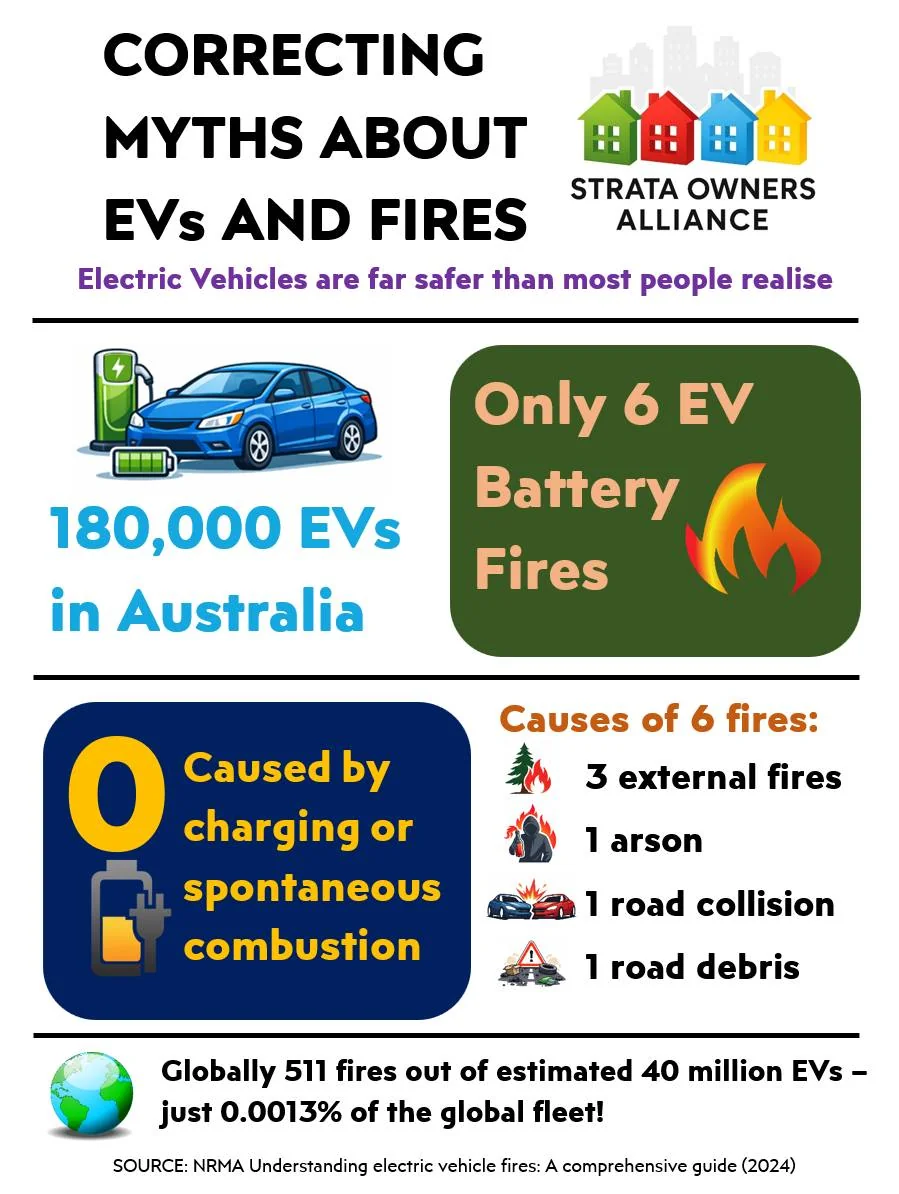

If you want to know how risky EVs are, consider how insurance companies create policies for spontaneous EV fires (they don’t).
The frequency/severity of EV fires are not large enough to justify a separate risk rating.
Let me reiterate: INSURANCE COMPANIES (who notoriously itemise obscure acts of God) do not consider it worth their time to separate this risk from any other spontaneous or unexpected catastrophe.
How many fires of ice cars?
ICE cars catch fire more often than EVs, but it is true that the fires are harder to deal with than ICE when EVs do catch fire.
Many, its just nobody cares when a camry burns down
Hey, why did it have to be a Camry?

Cuz those goombas are gonna lose a blunt between the seats.
Excellent use of Goomba
This is interesting… I live in Denmark and based on 2024 numbers, there were 470.000 ev and hybrid cars in the country then. There were 50 registered fires in 2024 and 46 in 2023
That is a lot more fires in Denmark, even considering the number of cars is higher. There are approximately 3 X more Ev and Hybrid cars in Denmark but adjusting for that compared to Australia, it is still more than double the number of incidents!
Maybe they are better at reporting them?
Sounds like the Denmark stats are “EVs and hybrids”? The Australian stats are only EVs. Since hybrids have both petrol and battery, counting them in this comparison is not very useful.
More cars inside buildings which have other sources of fire? I suspect more in Australia are kept outside away from flammable things.
My assumption is that Aussies have garages that they keep their cars in. The average home is drastically younger in Australia than in Europe. Plus the sun will absolutely destroy your car in tropical/sub-tropical/desert climates, and getting into a car that has been roasting in the 40C sun all day is honestly worse than getting in a car that’s been sitting in -10C overnight.
I don’t think the external fires category should count… probably arson as well.
That leaves 2.
Probably take teslas off that list too, since they skew the numbers too much…
Which I bet removes at least one of the remaining.
Part of the problem is those fires are significantly harder to put out than other vehicle fires are. Fire departments are going to need to invest in new fire fighting chemicals and equipment. Some regulations may be useful as well such as some fire supressants installed near the battery or a battery eject and roll foward/back feature. The main goal there being buying more time to get people, especially kids in seats, out of the car.
I think another part is the horrifying stories of people trapped in burning Teslas, which makes all electric cars look bad.
Because stories of people burning to death in ICE cars doesn’t even make the news.
ICE cars don’t make your burning car a puzzle room with unbreakable glass like a Tesla does.
Well that’s down to unsafe design. Car locks that don’t open in an emergency has nothing to do with EV or not. All cars have electric locks these days run from the low voltage (12v/24v) battery.
Totally, and you never hear about it with other EVs. But the image of being trapped in a burning car with no door handle is fucking terrifying and Elon has given EVs that association.
Just like I think every EV is just a stupid tablet on wheels with OTA updates that sells your data to third parties.
Oh wait that’s every car now so I’m never buying one newer than 2018.
Some regions have EV fire training that includes cutting open the battery pack to get water in. There should be an external hose hookup but governments are not really regulating EV for safety outside of China. Europe has mobile water bins where they submerse the whole car for 72hrs.
“are going” … EVs are already everywhere, and fire departments have been on it for years now.
Part of the problem is those fires are significantly harder to put out than other vehicle fires are.
If the battery is actually burning, yes… But that’s not a given. Upholstery burning is still a car fire.
Regardless, there’s a lot fewer fires. The easiest fire to extinguish is one that didn’t happen.
Do you have a source for fewer EV fires? The graphic doesnt seem to have any comparisons to ICE car fire rates.
Estimates are between 25 and 50x fewer fires per 100,000 for EV.
EV Fires vs. ICE Fires: Safety Comparison and Analysis — Lectron EV https://share.google/10FD9YASthmasL0mg
Somehow, people have no idea that petroleum is explosive and holds a huge amount of energy, and it is piped at high pressure around the occupants.
Neither do they realise…
EVs use lithium-ion batteries with an energy density of around 0.3 kWh/kg. Gasoline, by comparison, has an energy density of roughly 13 kWh/kg. That means ICE vehicles, including diesel cars, store nearly nine times more potential energy than EVs
They’re probably saying the battery is 4x the weight of a fuel tank. Not far off.
TBF, that is comparing the potential energy difference of a charged/uncharged battery to the total energy potential of gas.
It’s that potential energy that gets released when they burn. 9 times more energy equals a bigger woof when it goes.
No, it’s not and you probably intuitively know this already, but an uncharged battery burns almost exactly the same as a charged one.
Here is a other way to think about it. Let’s trade “gallons of gas” for “bowling ball at the top of the slide” both object represent an amount of stored potential energy.
Let’s arbitrarily say that you gallon of gas is equivalent to a bowling ball sitting on top of a 1ft tall slide. The gas tank is the equivalent of a ball sitting on top of an 18ft tall slide, and the battery is roughly a 3ft tall slide. If someone asked you which slide had more potential energy, you might say “the gas one”, but what we have missed is that the gas slide was built at sea level, and the battery slide is sitting on top of a mountain. Normally, that whole mountain’s height isn’t considered in the potential energy of the ball on the slide, but the battery fire is a catastrophic event where the ball flies off the end of the slide and falls down the side of the mountain.
Basically, the battery has a ton of potential chemical energy in it, which is used to store a little bit of electrical potential.
There may also be some energy released from the battery materials themselves burning (like, an uncharged battery might have a significant amount of energy to release when combusting)
Aside from the battery, there is no other source to fuel a fire in an EV.
That’s not true; most cars have a lot of plastic in trim, upholstery, etc.
it doesn’t just catch fire. No fires from spontaneous plastic combustion. it’s either electrical or leaked fuel.
Neither do gasoline or batteries.
OTOH, if you look at shitty electric scooters bought on shady websites…
We need figures on Real, true EVs vs whatever the nazis are selling. Those things explode just for fun
Teslas are “real, true EVs”. Just because they’re sold by a nazi doesn’t change that.