You must log in or register to comment.
Just like only trans ppl know how to make fun of trans ppl, only leftists know how to make fun of leftists
Joe many librals does it take to change a log bolb. None??? Their to busy??? Their gender 🤣🤣🤣🤣🤣🤣🤣

Thanks for making me spit my drink. Have some reddit gold !

Makes sense, you have to have at least a baseline understanding of something to properly make fun of it
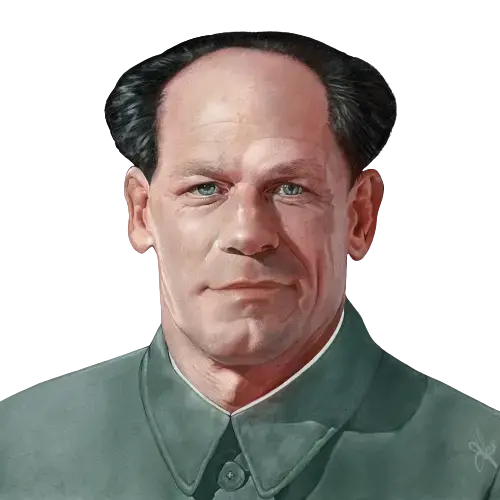
Only after someone knows the particular essence of many different things can they proceed to generalisation and know the common essence of things.
-Mao Zedong
I mean, we do have a lot of experience making fun of other leftists. Conservatives just don’t do it anywhere near enough.
how come we’re so good at making fun of right wingers then?
“Only ppl who are part of the group know how to make fun of that group” isnt universally true, and right wingers are just easy to mock
RW povs are also hegemonic. It’s the same reason black people know how to make fun of white people and not vice versa. Everybody is involved in white “culture” whether they want to be or not. Likewise, reqctionary politics surround us. We all get a chance to see it in detail
I think it’s more “people who understand a group are better at making fun of that group.” most of us understand right wingers fairly well, since we are surrounded by them every day and their paper thin skin and toddler tantrums over whatever thing the tv has told them to be scared of this week.
I’m sure there’s some right-wingers, or right-wing positions, that it would be easier for a fellow right-winger to mock. But generally, the average right-wingers beliefs are pretty simple and easy to comprehend, and what you understand you can mock. They do after all tend to avoid higher education.
They’re just really easy to make fun of
even liberals manage to do it sometimes
The other reasons stated are great but a not insignificant number of leftists also came from right wing backgrounds and either rebelled against it or analyzed it and realized how dumb it was.
For my part I spent time with a lot of libertarians as a teenager, which makes sense when you’re a stupid teenager and don’t know what libertarianism is. Real scrutiny really tears down the facade.
I approve of Disco Elysium. This is a genuine endorsement by the very real, actual Thomas Pynchon.
What about OBAA?
I liked Inherent Vice better.
Man, between Licorice Pizza and One Battle After Another, Paul Thomas Anderson really has a talent for starting twitter controversies where tons of people have really annoying opinions
Well that makes one thing he’s good at!

I like his movies

Seriously, if not for him the best director of his generation would be Tarantino, and I don’t want to live in that world.
Hayao Miyazaki clears
…they’re not of the same generation
Also animation and live action are different. Also they’re different nationalities.
Clears.
good news: the best director (american, live action) of his generation is David Fincher.
deleted by creator
Tarantino? Pff he just a glorified guy ritchie.
I should probably finish “playing” that reading game
So is One Bad After Another really good? Or bad? Or meh? Or very divisive and all 3 to different people? #
I thought I was hearing nothing but good things, except I think from FD Signifier, but now I can’t tell anymore. Maybe I need to watch it, but don’t want to waste my time if it’s not as good as say, Andor, at examining left-wing revolutionary politics.
Well, it’s not a treatise on political economy or a platform for a party. It’s pretty much just a fun action/comedy set in a small scale conflict between a leftist underground group and a bunch of nazis and ICE goons.
It’s at the very least entertaining, I’d give it a shot.
That sounds fun
The way i see it, it’s just a good comedy nothing more nothing less. It’s not a serious movie at all and frankly makes fascists look cooler than the resistance guys.
I thought it was really good. Shows different types of revolutionary action in a positive light, doesn’t do stupid both-sides shit like every other westoid movie. Also highlights how effective revolutionary action is about organizing, not individual adventurism (another pitfall of western revolutionary media).
Shows both the ridiculousness and dangerousness of different types of fascists. Draws a poignant comparison between ego-driven rage kind of evil verses the banal, functionary evil that work hand-in-hand.
Also just flows really well, doesn’t feel nearly as long as it is.
This is more of a vaguepost than responding to your comment, but I feel like too much of online media criticism nowadays is CinemaSins-level discourse on whether something is good or bad, rather than like, critical analysis.
Like I’ll finish watching a movie and go online to discuss shit like themes and meanings and politics or whatever, and all I find is people arguing whether it’s okay to like something or not. I don’t get it.
FD Signifier’s vids seem solid on that front, though, from the couple I’ve seen. I remember liking his ones on Sinners and Inside
spoilers
Also highlights how effective revolutionary action is about organizing, not individual adventurism
I don’t think the movie says this. The only character who is effectively organizing is Sensei Sergio (Benicio del Toro) but he’s not doing anything revolutionary, just defending vulnerable people against fascism. That’s admirable and something we gotta do IRL as well, but I think if anything the movie is showing revolutionary organizing as ineffective and hopeless. The organized network of revolutionaries has existed for 25 years (assuming it existed with the French 75 pre-timeskip since the guy who reprimands Comrade Josh knows Bob from then) and the future looks exactly the same. They aren’t even capable of protecting Bob and Willa because of Comrade Josh being inflexible and a book worshipper; this is played for laughs in the movie but I think it clearly is a criticism, too, and not really an invalid one.
Spoilers below (formatting doesn’t work in my app sorry)
I don’t think the movie says it so much as illustrates it, if that makes sense? Compare it to Joker and V for Vendetta, which are a couple of the many examples of the western individualist spontaneity fetish.
For one thing, I didn’t get the impression OBAA was trying to prescribe or condemn specific revolutionary tactics. PTA movies aren’t really vehicles for strong critiques like that, in my opinion. Rather they’re studies of how different forces and personalities and interests interact with each other, leaving the audience to come to whatever conclusions. Like, The Master isn’t about either of the main characters being good/correct, but about the fascinating attraction and contradiction between Hoffman and Phoenix and what they represent philosophically.
Similarly, the various revolutionary strategies/groups portrayed in OBAA are complex, sort of laid out with all their conflicting boons and banes. The first we see of the French 75 is a successful raid on a concentration camp. We then see them brutally hit by the infiltration and betrayal that crushed so many similar movements in real life. Then we see their struggles surviving afterwards, with the heightened paranoia and bureaucracy. It’s exaggerated for entertainment value, but otherwise a fairly measured portrayal-- maybe even optimistic, compared to reality.
del Toro’s movement is an interesting contrast to the loud and flashy tactics of the French 75. Less focused on spectacle, more on long-term survival. Perhaps lessons learned from the experiences of the French 75. Despite the latter’s failures, there still seemed to be high respect for them within del Toro’s movement, despite the tactical differences.
The newer movement functions well but isn’t able to confront capital. I don’t think that necessarily makes it non-revolutionary, though. Trying to overthrow capital without the strength to do so and support of the masses is adventurism, so survival/protection and building dual power structures is revolutionary until the time is right. Either way, I don’t think we’re supposed to view it as the “correct” strategy to replace the French 75’s “incorrect” strategy. Both of them have strengths and weaknesses, both have had some successes, but neither have been able to overthrow capital yet. Both can be learned from.
Ultimately my strongest argument in favor of the movie is tone. In any other movie, the revolutionary failures we see would be depicted as tragedy. And for good reason-- most of the revolutionaries end up dead or imprisoned. The system remains unchanged, fascists and capitalists maintain their power. Just like real life.
But here I think del Toro’s revolutionary optimism wins out. We’ve been fighting for centuries and will continue fighting for as long as it takes. It isn’t some Tarantino cathartic violent victory fantasy, but it also isn’t a capitalist-realist grayscale dystopia set to heart-wrenching music.
It’s one of the few movies that’s captured a concept I’ve never been able to effectively put into words. We can’t ignore the brutality of the world, but we also can’t just accept it or succumb to it without a fight. Some sort of revolutionary zen or something, finding happiness or meaning in the struggle despite how much of a struggle it is. Pessimism of the intellect, optimism of the will. Abandoning the expectation that things have ever been good or easy, but retaining the ideal that they should be and can be someday.
I dunno. Brain fog is killing me right now so I’m having a hard time with language.
You make some good points.
spoiler
Still kinda feels like the movie is prescribing something a little bit especially at the end when Bob takes the grill pill, gets an iPhone and is happy when he takes a selfie with Willa. I was mulling it over and I can’t help but feel like the movie is either saying that Bob found meaning in fatherhood that he couldn’t find in radicalism (in which case the iPhone represents living a normal, happy life), or that he’s given up on his ideology (in which case the iPhone stands for consumerism and individualism).
Think about how that ending squares up with the way that the French 75 failed: Perfidia was too caught up with mixing work and pleasure in her affair with Colonel Lockjaw which led to her capture and betrayal; her internal, personal failings (or to say it as a lib would, her human nature) got in the way of the revolution, which is typical of adventurism.
The critical thing is that the radicalism is just as much of a vehicle for the libido of the characters as it is a tool for effecting change.
Bob in the future is doing the same thing but reflected inwards: his internal demons make him anti-social, paranoid, aggressive, overprotective, and a total mess of a man. Then his political ideology is situated as a rationalization of those internal demons: he doesn’t really have to live out in the middle of nowhere with no contact to the world and treat Willa’s friends like they’re feds, that’s what he’s doing because of his trauma but it’s rationalized because of the political situation he’s in. It’s more about his id than it is a rational response, but it can be rationalized. You could argue that the movie vindicates his paranoia so it wasn’t irrational, but that’s not the point, the point is the audience looks at Bob as someone who has to get over this phase and that’s the conclusion to his character arc that the movie’s ending provides. The ending is also telegraphed as being a positive development for Bob and Willa, it’s a bit difficult to justify the reading that they’ve “given up” when Willa is still showing up to protests and had her whole character arc which mirrors Bob’s; is the moral of the story that infosec is for losers?
I really like your analysis of Bob’s character but I think I frame it differently.
I’ll have to rewatch it to confidently make this point, but I’m not certain Bob’s character arc was about overcoming paranoia so much as overcoming the trauma that caused his paranoia, and a key part of that journey was the deaths of the people directly searching for him. External change leading to internal change, more than the other way around.
When Bob’s paranoia is portrayed as over the top, I see it more as “this is what the system actually does to the people we’d otherwise see as heroes” than “look at this silly man being paranoid”. He’s one of the only ones of his original crew to survive, after all, and iirc his daughter having a phone leads to the capture of dozens of revolutionaries. So if anything, we’re supposed to get the impression he’s paranoid, but realize he’s at least partially correct, given the circumstances in which he finds himself after working with the French 75.
The contrast with del Toro is then more about the circumstances that allow him or encourage him to be nonchalant. The wider, integrated community support and (most importantly, I think) dual power structures give his movement much more stability and staying power. They operate under the spectacle rather than trying to break into it.
While I think we can make favorable comparisons with del Toro’s tactics versus the French 75, I don’t think we can say the former is inherently superior in every way. In some ways they both represent necessary aspects of revolution, the active militarized vanguard and the logistics network necessary to support it. And I got the impression that they did support each other to some degree in the movie, although since all of this is more of a backdrop to the characters we aren’t really shown the whole picture. It somewhat resembles the dual-structure model that George Jackson laid out in Blood in My Eye iirc. Actually I think his model was more like an above-board, legal org that secretly funded and funneled members to an underground active vanguard. In any case this is tangential to what you’re saying. But I like to see it as, at least in part, a portrayal of two different aspects of revolution.
But I’m gonna walk that back a bit lol, because you’re definitely right about the fatal flaws of the French 75. I remember now that my first impression when watching the movie was a comparison between western revolutionary spectacle versus third-world revolutionary pragmatism. That might be the proper reading actually. But I still got the impression that we’re supposed to have a critically positive opinion of the French 75, similar to how we might think of well-meaning but failed revolutionary movements. Because they had some success before being decimated, and their failures were due to specific tactical choices, bad luck, and personal flaws rather than their choice of violent praxis. As such I don’t think a lib critique like “active resistance is futile, only passive integration works” actually sticks. Maybe a contrast between being image-driven versus outcome-driven. Idk.
I can see the infosec/opsec is for losers reading, but since we’re shown multiple times the repercussions of bad opsec, I don’t fully buy it. There’s certainly a conflict, but I think the opsec/paranoia itself is downstream of larger conflicts (trying to be safe versus trying to live a normal life versus trying to be a revolutionary) and the way people interact with those conflicts is used to color their characters. In Bob’s case it’s symbolic for his relationship with the world as well as his internal outlook or progress in processing trauma. He’s hyper-obsessed with spectacle (fireworks, revolutionary movies), so a lot of his motivations are about his image and (in)visibility. I’m repeating myself lol, but del Toro’s approach to spectacle is almost opposite: maintain a neutral, care-free image while actively running a massive underground network. So maybe I’d argue that part of Bob’s internal arc was his relationship to spectacle rather than his approach to opsec? He flip-flops between extreme attraction to spectacle to extreme avoidance of it, then learns to value something material at the end. I dunno I’ll have to rewatch. In any case, Bob loosening up on it wouldn’t be feasible if some of the key villains were still alive and searching for him.
To try to more directly respond to what you’re saying, I mostly agree with how you characterize Bob, but see these conflicts and developments more as descriptive results of his circumstances and motivations, rather than a prescriptive critique of his outlook and choices. None of his choices make a large impact on the plot, he’s just a human trying to navigate and survive in a world he doesn’t understand.
Of course since PTA isn’t an ML revolutionary, we can’t and shouldn’t try to actually learn correct tactics directly from the movie lol. And I don’t think we’re meant to. The worldbuilding and characterization of both reactionary and revolutionary people/forces just happens to be nuanced enough to provide ample ground to draw comparisons to various aspects of real-life struggles. More than most movies with quasi anticapitalist aspects at least, like Mayhem or El Hoyo. And the fact that every single revolutionary is portrayed as good (even if flawed) and every single oppressor is betrayed as evil (even if banal/nice/incompetent/ridiculous) puts it above 99% of movies for me.
Maybe kind of that trope of an unideological auteur accidentally creating agitprop just by writing realistic or well-rounded characters navigating a complex world lol.
I think you should watch it but consider that the movie isn’t necessarily taking your side and Paul Thomas Anderson is, at best, a sympathetic lib but definitely not a leftist.
IMO the conclusion of the movie doesn’t really make sense if you assume that the movie is written from a perspective of “good people want socialism to Actually Happen” more like “good people can like the Idea Of Socialism”
It was better than you think, if you were thinking it’s Don’t Look Up levels of bad. But it also kind of betrays an idealism it tries to convince you it’s arguing against thematically. I don’t have much bad can I say about it without spoiling, but the politics of the movie would be more coherent if Benicio del Toro’s story was more important to the overall plot/themes, I’ll put it that way.
ban jamrockhobo posting