So what’s that gap for?
You can clearly either fit a few more, or make the total area smaller.
“then” is used to depict time, sequence or a causal relationship. “than” is used with comparative adjectives, to depict comparison.


So what’s that gap for?
You can clearly either fit a few more, or make the total area smaller.


It actually can.
No extra protocol should be required for it.
Just needs someone to implement it in their compositor.


Make sure to implement the arbitrary angles in your Wayland compositor.


Oh, so by “threads”, you meant screw threads?
Then that makes sense.
I would normally expect a valve to be screwed in.


Now that I read it after having eaten some food, I actually managed to get the picture.
Of both, the previous - valve leaving the bottle - and the - projectile into the bilge.
Okay, I had to look up “bilge” for that.
Although I don’t remember there being threads to hold down a valve wherever I saw them, I’d rather not have to visit a ship again, just to make sure.


This is second hand info, but some people have had problems in bigger projects where the borrow checker ends up rejecting valid Rust code.
I think I have seen those comments right here in Lemmy.


All those words made sense. Separately.


I am starting to learn Rust and the only reason I don’t intend on using it for GUI stuff for the time being is because I just like QtWidgets a lot and GUI toolkits in Rust are a pretty new thing.
Apart from that, pretty much all logic can benefit from a language that forces people to be more explicit.
Although I won’t consider it for larger projects until the borrow checker gets the overhaul it needs, because I’d rather not start hating another language.


To prevent fictionalist comments in replies.


How many of you use real answers for security questions?
bruh
[](https://xkcd.com/244/)

But software engineering has this unique “I can conjure a machine to do my bidding” quality to it.
If this kind of jealousy exists, it’s pretty nonsensical.
Machines are made in factories, using materials and machines that no one of us Software Engineers could afford.
The only Digital IC I would be able to make by hand are the little handheld-sized AND gate, OR gate, Flip-Flop etc, things (which will still end up requiring more than 1 person and a significant amount of investment) which are far from being able to run software from even generations ago.
And I don’t need to write software to make those things to do my bidding. I can break down the task, create the logic and build it from the ground-up using those gates. Because the logic itself (and not really the language) is the value I create.
And that will always take time.
Also, automating that, doesn’t require an LLM. Once I can make a machine to do a thing, I can make a machine that can make the previous machine, simply because I have a way to make a device that is logically sound and consistent.
People put all different kinds of logic into the same umbrella of “AI” and act as if they have the same value, but they don’t.
When you go with stuff like ML and Computer Vision, you might be shifting from an anvil to a hydraulic press, but when you start using LLMs for stuff other than language, expecting it to do logic and hoping that it won’t make a mistake somewhere you are not looking, is far from that.
With a hydraulic press, you know what piece you can work on and upto what level after which you switch to precision tools. But when you use a hammer to do a screwdriver’s job it may look just fine and may work where you are looking, but will then end up failing in ways you don’t know of, because you didn’t realise it was a hammer and didn’t take a good look at the screw.
The magic is turning messy human intent into something a computer can execute—reliably—in the real world.
This part is correctly said. What is lacking over here is that we are using the wrong tool for the wrong job and the price we pay for it, is going towards reducing our ability to use the created software for ourselves.
The expectations increase. The baseline competence rises.
The expectations for quantity increase.
The baseline quantity output rises.
The maximum possible quality falls.
The expectations for quality decrease (as if they weren’t already low enough).
The ability to understand your product, vanishes.
And everyone ends up calling it “magic” and you a “chanter”.
Tools of automation reduce unnecessary variations.
Deploying automation with deterministic devices en-masse, can help reduce variation and bring up the bottom line, with the trade-off of maximum quality.
When you start creating the automation from a non-deterministic point and use it to feed input into a deterministic GIGO, then in turn for the trade-off of maximum quality, you get ‘GO’.
Any engineer worth their salt can do proper logic. And most humans can learn a programming language, just as any language *sometimes more easily).
But if an engineer not understanding a language now gives their logic to an LLM that writes the wrong logic in said language, what is telling the Software Engineer, that it was not the logic the engineer intended. And if the original engineer can tell that to the Software Engineer while checking the code, they can do so for writing the code.


Correct answer.
After setting the spin down timer using hdparm, unmount the drive and it will spin down accordingly.
This also makes sure you are not spinning down drives just for a few minutes of rest.
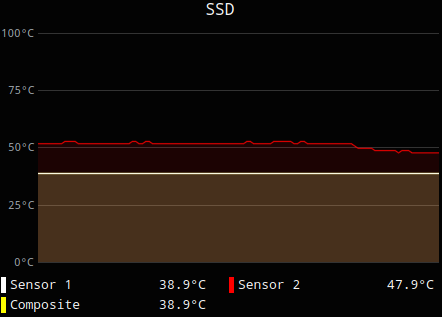
Now just if my SSD were not heating itself to 40℃ when at its lowest power mode when unmounted…
I don’t plan for all of them.
Just when I realise some specific one is getting too repetitive, I make a script for it.
Never needed to do so at home (yet), because my IDEs usually provide good enough boilerplate and I am mostly doing learning projects (i.e. hardly any repetition), but I did make a few in one of my previous work places, which someone else might be using rn (hopefully not, because it was meant for me and not for users).
Fix it by simply turning off “Low Disk Space” warnings in System Settings.
Mix that with keeping your / and your home cache, local, share etc directories in a non-data drive and you get no warnings. Only errors when a write fails.


I only recently learnt about how em-dashes had a separate name, thanks to its popularisation by people trying to detect LLMs.
Earlier, I just thought of them as just a longer dash and I used them when manually writing (often made them longer than 2 characters), but just used a normal dash when typing.
But you know, one can really just use a Wayland window.


If you need to lie about it, perhaps consider if you really need to speak about it.
There is a difference between considering someone’s feelings and assuming someone’s feelings. And I have experienced the difference enough times when I just need information and all I get is misplaced consolation.
Now that makes me think.