My understanding is that it is impossible to tell right now, it would heavily depend on the revolutionary process of each country, the path to socialism is less of a recipe more of an improvisation like in jazz, you need to know the scales work well with your companions but what comes next is heavily dependent on what is going on right now, it’s really hard to have a one size fits all plan. Even in some quite basic stuff Lenin believed that revolutions would always start with the urban proletariat, while in China came from the farmers, because reality there was very different, and the world we live now is much more different from revolutionary China than revolutionary China was from revolutionary Russia, so the shape of a current time revolution ia expected to be different and to require modern adaptations of theory. Not yo say that the theory is obsolete, as some do its core its invaluable, but it needs to be adapted to the reality of each place
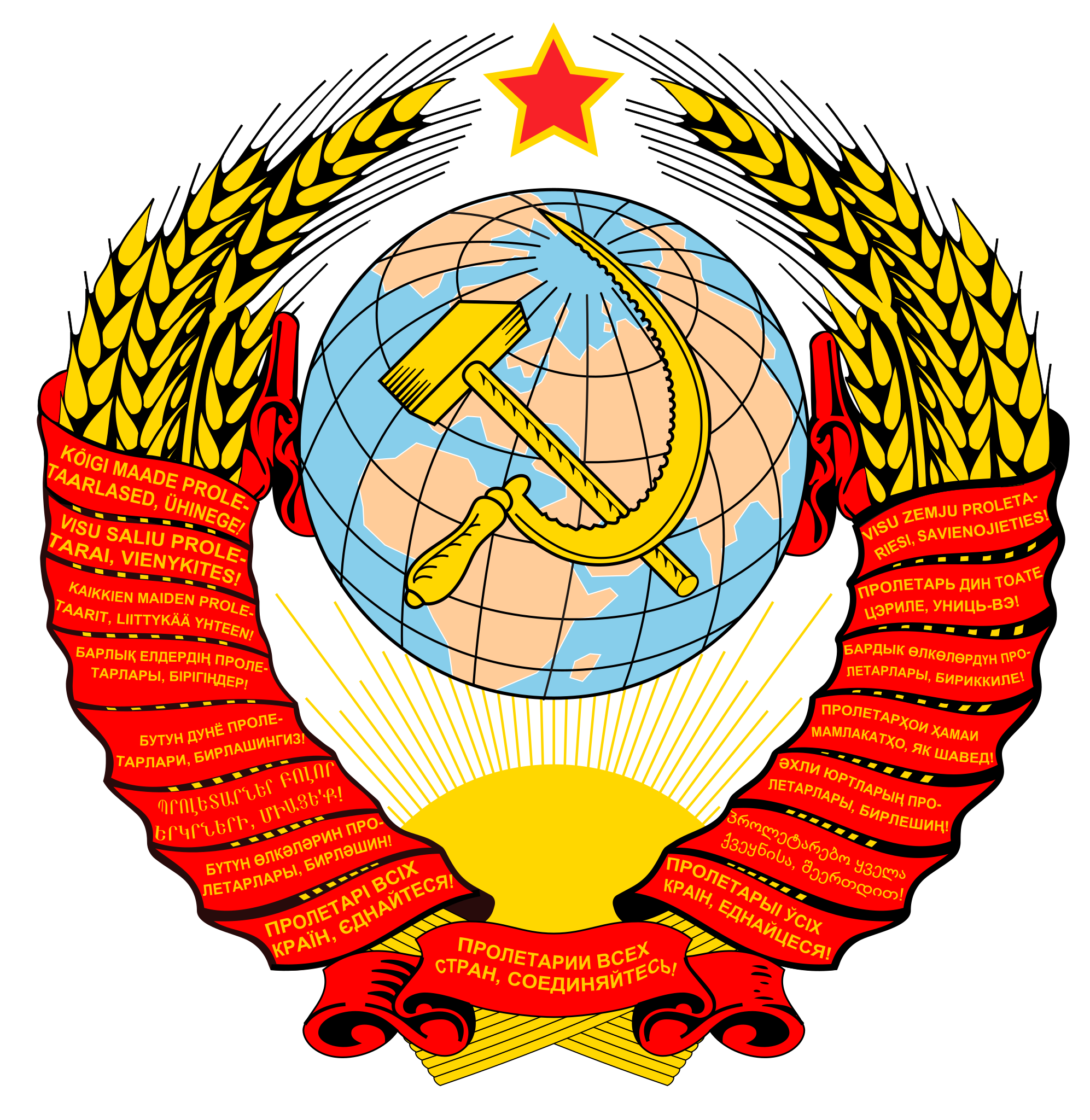
Federal union for a country with many different nationalities (USSR), unitary state with autonomous regions for countries where one nationality makes up most of the population but there are significant minorities (China), unitary state for one-nation countries (Cuba).
A mostly Unitary state with regional autonomies to avoid undue separatism, and some degree of federalism to avoid a governmental collapse if the capital falls for whatever reason.
Unitary state with autonomous regions but not regional parties. The formation of regional ruling cliques must be prevented to avoid a disintegration scenario like Yugoslavia or USSR where separatism can be stoked by compromised regional elites, because if that happens then imperialists will take advantage of it and create puppet regimes and devastating fratricidal conflicts like we have seen in Yugoslavia and between former Soviet republics.
So… China?
China is still whole. USSR is not. Yugoslavia is not. Ergo they must have done something right in how they structured their state that the other two did wrong. A state must be able to survive without disintegrating at the first economic or social crisis. Because no system will be perfect, no economy will grow forever, no state will avoid crises forever. It just has to be robust enough to stay together even when crises hit.
There is also a lot to learn from Chinese history about what causes dissolution of states, as China has broken up many times before, and it was almost always due to regional elites becoming too independently powerful vs a weakened central government. It always got particularly unstable when hereditary regional ruling elites began to form and develop their own networks of patronage and parallel loyalty.
It was always much more stable when the central government controlled the appointment of bureaucrats.
Of course i’m talking about diverse, multi-ethnic, multi-cultural states. It is much easier if you are just an ethnostate, as most European states ended up settling on that model to guarantee stability (it’s why France for example heavily and forcibly uniformized its language and culture). But that is not something that we as socialists should aspire to or look to as the only possible model of state-building.
(Sadly some self-proclaimed socialists seem to think that any state that is not an ethno-state is imperialist and should be broken up but i vehemently disagree.)
Iran is another example of a stable multi-ethnic state by the way. The Russian Federation so far also seems stable. India, for all its many issues, is another that managed to remain intact. So we should be asking what do all these states have in common and what can we learn from them?
Hmm…
Depends on the country
Pan Arab.
Federal Union then, there would be too many regional differences for a stable unitary state.
New Capital or Cairo/Riyadh?
Unironically Jerusalem would be a good pan-Arab capital.
I think it strongly depends on how exactly the union would be achieved.
What about India? It’s already a federal Union that has existed for 79 years.
Dependant on localised material conditions,I mean what else is there to say there isn’t a “once size fits all solution” to achieve socialism.
Absolute monarchy with a long title /s
probably a decentralized state in the first stages to avoid reactionary hideouts, and then something more federal-ish
when confronting a general question like this, i like to look at the analysis of historical struggles to get a basis for my thinking, and this seems like a good starting point: https://www.marxists.org/reference/archive/stalin/works/1917/03/28.htm
the current political trend in the US is moving, at least a little bit, toward more federalism as a way to ease tensions between different sectors of the ruling class, so that there are variations in the harshness of capitalist exploitation to better suit different domestic industries and the personal preferences of the capitalists. i think it can’t be ignored that this is happening in the context of the weakening of the US empire, which makes these internal conflicts of the capitalist class fiercer.
in terms of AES countries, a move from a unitary state toward a federation would be an admission of at least instability if not impending defeat, much as it would be in a capitalist country. forming a new AES country would very much depend on local conditions, but the goal should always be to preserve as much political and economic unity as possible. the only exceptions we should permit would be if there are pressing issues such as internally oppressed nations that would threaten the whole project if left unaddressed.
Decentralized states are usually more resilient when faced with an external crisis (USSR when Germany attacked, Iran’s resilience against US attacks) while Unitary states are more stable otherwise.