
4·
9 hours agoI like Pinyin better for the most part too, but there are one or two things that i think Wade-Giles does better.
I like Pinyin better for the most part too, but there are one or two things that i think Wade-Giles does better.
This is exactly the correct response, and you have formulated it perfectly.
We have to judge people by their actions, not by their words nor by the beliefs they may or may not hold in their heart. I can be genuinely convinced and believe wholeheartedly, for example, that veganism is correct, but if my actions do not reflect that belief it does not matter what i believe.
A person can hold genuine anti-Zionist beliefs and speak out forcefully against Zionism and yet still act out the function of a liberal Zionist. The question is, which struggle does that person see as primary. And it is clear that Hasan considers the primary struggle to be that of electorally prevailing over Republicans. This takes precedence for him over everything else and so he is willing to compromise anything else he believes in for the sake of that goal.
This is why, even as he criticizes their Zionism, he still mobilizes votes for the Democrats, even for Democrats who completely disavow him and disagree with everything he claims to stand for, and then makes endless excuses for his favorite Democrats once they are in office when they inevitably betray the more radical side of the base that helped them get elected. Hasan is above all else a sheepdog whose function is to dupe well meaning but naive leftists and funnel their efforts and attention into the liberal-bourgeois political system. He sells reformism as a viable political strategy for advancing socialism. Everything else is downstream from that.

The state ideology of socialist Romania was Marxism-Leninism.
I give it a 99% probability this was orchestrated through NGOs.

A month ago i thought Ta’izz was a distant dream. Now i am thinking Aden is on the horizon.
Good skit but what does it have to do with the PSL? The PSL is not mentioned, or did i miss it?

https://www.sciencedirect.com/science/article/abs/pii/S0048969721015965
https://www.sciencedirect.com/science/article/pii/S2666911025000097
Definitely a valid concern. Particulate filters and capture technology will hopefully improve as China’s “zero-waste” strategy progresses.
Like, maybe there existed some early priestly religious class that started this sort of administration/standardization of trade.
You might be interested in Michael Hudson’s writings on this subject: https://michael-hudson.com/2018/04/palatial-credit-origins-of-money-and-interest/
I assume you mean something like cryptocurrency.
Yes. “Cryptocurrency” is not and will never be currency. It does not fulfil the basic functional requirements.
What Marx is saying there is quite evidently true. If you do not have division of labor and everyone is essentially self-sufficient then there is no need for a currency.
What i was pointing out is that historically in every society that has had some form of currency, whether it was ancient China or Mesopotamian city states, there was a state or state-like authority with monopolistic control over the production of the currency and which served as the final backstop of confidence that the currency you trade for today could still be used tomorrow to trade for other goods. Otherwise the system does not work.
A currency is only useful if it keeps its value somewhat constant, so you need to restrict and manage its production. If you use shells or (standardized and regulated) bits of metal you have to have a state monopoly on the production of that resource. You cannot have people who independently mine that resource just flood the system with large amounts of it, nor can you have speculation wildly fluctuating its “price”. This problem of fluctuation was historically solved by stamping those bits of metal (or more generally marking whatever thing you used as currency with some form of unique identifier) so that the value of the coin can be divorced from the value of the metal (or whichever other resource) it is made from. And then you have to strictly control against forgery.
Finally, you have to have some form of authority that guarantees that even if everyone else around you no longer has confidence in the currency, that the state will still back its value, essentially promising you that no matter what happens you will still be able to exchange that currency for goods. Otherwise you can end up in a situation where your “currency” is a purely speculative asset whose value can drop to zero when public confidence in it collapses.
Edit: Oh, and i forgot to add that one of the most important functions of money and why it arose in the first place was and continues to be to pay taxes to the state.
Because currencies that are not backed by a state are not currencies, they are just exchange commodities.
Also, in the real world things have value because they take labor to produce and the resources needed to make them are finite. Many resources in Minecraft are not finite and some can be automatically infinitely duplicated, therefore their labor-embodied value will be zero and trading them is just a LARP.
The original trilogy is pretty good, especially the first two games. But as far as Bioware games go Dragon Age Origins is still better.

No. Drones are important but they don’t replace soldiers and they can’t hold a front line.
For the most part, yes, probably.
Lol. You could make a rule banning those sorts of disputes.
Nope. Another nothing-burger. The war will end with the military collapse of the Kiev regime.
Series? I thought that was an old Soviet film based on a book by the same name?

Brazil becoming a significant regional power in its own right is a natural consequence of multipolarity. BRICS countries displacing US and European influence in Africa is ultimately a good thing.





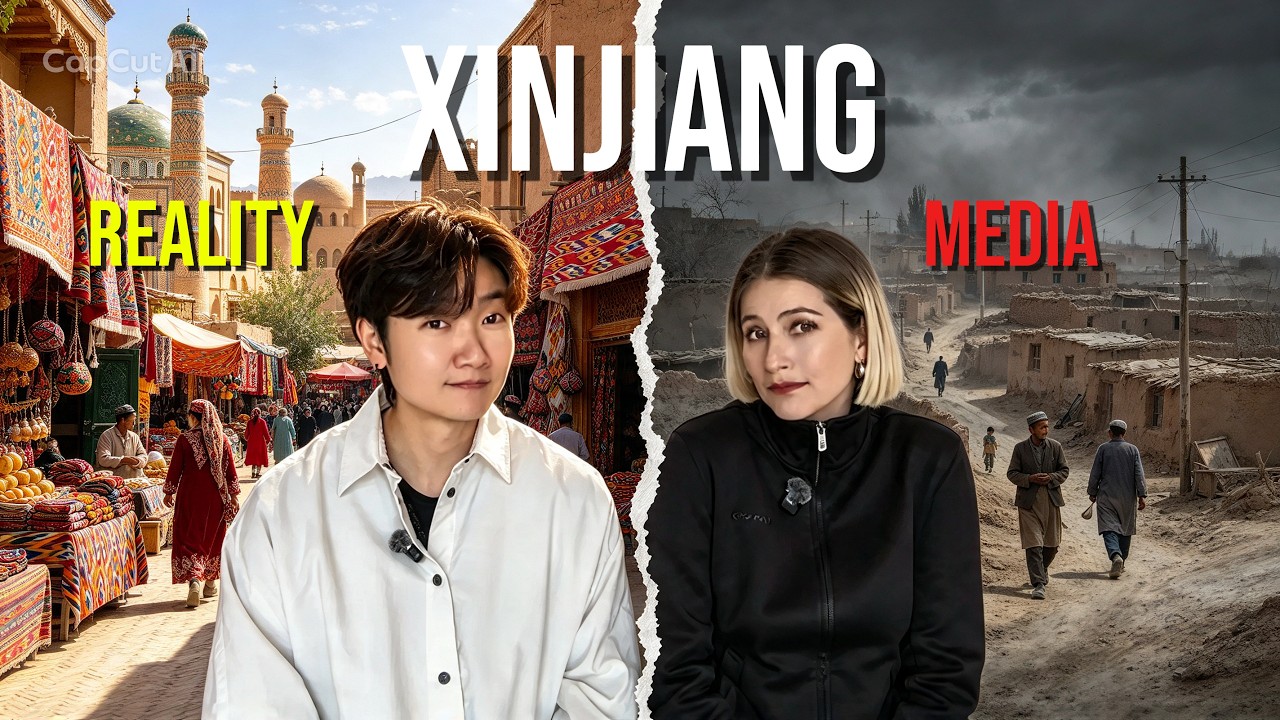








This is just my subjective opinion but i think that Wade-Giles’ “hs” is a more intuitive spelling than the Pinyin “x”. I also like that it makes a little more use of the “ü” where it is appropriate to do so.
On the other hand, I really don’t like how it represents voice vs unvoiced consonants and i think this is something the Pinyin is much better at. I also don’t like how often it opts for a “u” instead of the Pinyin “o”.
And all the extra h’s at the end of syllables in Wade-Giles is something i’m not personally super enthusiastic about – i don’t think they are really needed – but I could see how some people might find them a good pronunciation help.
Basically i prefer Pinyin in 95% of cases, but there is still that 5% that i think Wade-Giles does better. And that score could almost be a bit higher if Wade-Giles opted for “dz” instead of “ts” where Pinyin uses “z”, because in principle i do think “ts” is a better latinization than Pinyin’s “c”.