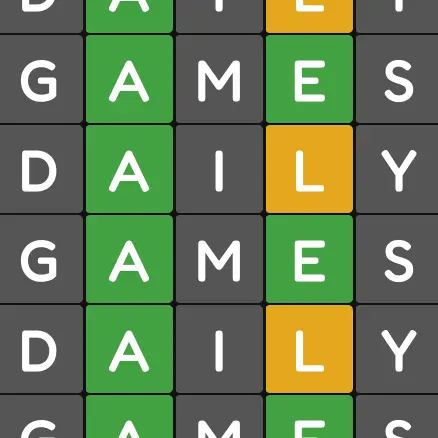
Antiwordle #1592 3 guesses
⬛🟥⬛🟨⬛ 🟥🟥⬛⬛🟨 🟥🟥🟥🟥🟥
I like it.
Antiwordle #1592 3 guesses
⬛🟥⬛🟨⬛ 🟥🟥⬛⬛🟨 🟥🟥🟥🟥🟥
I like it.
This all day.
I think one if the big things that people miss is that while it may be the most prominent fights in the headlines, there are countless little fights going on all the time and they have a huge impact. They don’t make national news or sometimes even local news, but they still matter. It’s easy to dismiss them, but they still move the overton window and they still have a substantial impact on the day to day lives of people across the country. Every union steward in some small retail chain standing up to management makes an impact. Every judge who stands up for the rights of marginalized people makes an impact. Every city councilor who votes to fund programs for people in need. Every volunteer who shows up day after day to soup kitchens and food banks. Everybody who stops to give a few bucks to a person on the street. Everyone who sees someone struggling and takes the time to try to lift them up. Every advocate who spends their time helping people who are trying to find a way out of horrible situations.
The less visible stuff is much more wide-spread and makes a huge difference, maybe even more of a difference in many cases, than the big visible stuff.
It honestly drives me up a wall when people who seem like they never go out and connect with the real world around them spend so much time ranting about how everyone’s screwed and nobody’s doing anything about it. All they have to do is look outside or step outside themselves and lend someone, anyone a hand.
I’m specifically talking about an exploitable vector that can be taken advantage by any number of people or organizations, so it’s not really about particular users. There are examples, to be sure, but pointing them out or accusing them of working for anyone in particular would be counter-productive. Not only would it distract from the subject at hand, but they can literally make an infinite number of sock-puppets so it doesn’t really matter unless you feel like playing an absolutely exhausting and fruitless game of whack-a-mole.
I’m seeking to illustrate the behavioral pattern, the weakness that it exploits, and the damage it can do, which I expect to have much more efficacious results.
Oh. Welp. At least it reduces their engagement.
It could also be AI generated responses with similar prompts. Or a call center with specific guidelines for tone and content. Or some sort of remote platform with guidelines for posting. I know there are call centers full of scammers and the same was true of bot-farm employees at some point, probably still.
It is pretty fascinating. But yeah, the odds of ever getting a real answer are pretty low unless there’s some sort of whistleblower.
But hey, I bet said whistleblower could start a pretty profitable career in independent investigative journalism if they did provide that information to the right people, or if they self-published successfully. Just a thought, if such a person happens to be reading this!
A lot of them are probably literally the same person.
Hopefully it serves to further demonstrate my point. It certainly has solidified its legitimacy for me.
It’s also very helpful of them all to come draw attention to themselves so those who wish to identify and block them have an easy opportunity.
I’d like to draw a parallel to data security. Why make a strong password if nobody’s out there trying to break into accounts? Why secure your server’s ports if nobody’s going to attack them? Why take precautions against malicious collection of data to sell to third parties if we’re not sure who or how that data would be used?
These are behaviors that we don’t know the specific motivations for, we don’t know the individual bad actors in question or who they’re working for or what their specific plans are. But we know that if someone calls you claiming to be Geeksquad and tells you to go buy a bunch of gift cards to read to them over the phone, you’re being scammed. We know that if someone pretends to be a representative of a company and comes asking for your password, you shouldn’t trust them. We know that if certain kinds of traffic are spamming your ports looking for vulnerabilities, they don’t mean well.
Why? Because we are aware of the threat vector and can move to protect it before knowing the details of who in particular is planning on exploiting it. I don’t need to know specifically which hacker wants to break into my server to limit open ports. I don’t need to know who wants to steal my Steam account to know setting up 2fA is worthwhile.
Assuming good faith in bad actors is a vulnerability. The exploit vector is an attack on the political power of the left. I don’t need to know specifically who is behind it. I could speculate. Maybe it’s MAGA, maybe it’s Russia, maybe it’s some foreign bot-farm being hired by some other authoritarian regime, but that doesn’t really matter. What matters is that allowing the threat vector to remain open disempowers the left.
Why Lemmy? Why a small niche leftist platform rather than a larger platform?
Let’s say you’re a time traveler who hates punk music. What would be more effective to stop it before it starts? Sabotaging the planning for the Warped Tour in the 90s, or burning down CBGB in 1973?
CBGB was a small club at the time, barely notable at all. The Warped Tour, on the other hand, was a massive endeavor involving dozens of bands and thousands upon thousands of punk and ska fans. But if you know your history, you know that CBGB was a small venue with a massive impact on the American punk scene. It was a place where a lot of the bands that we know today got their start and came up. The Warped Tour, on the other hand, while probably influential on 90s teenagers who got to go see 20 bands in person for 20 bucks, was mostly just riding the wave of punk’s popularity and capitalizing it.
Targeting leftist spaces, especially small leftist spaces, could potentially be much more effective than targeting more general spaces. Lemmy in particular selects not only for leftists, but for anti-corporate, anti-establishment people with enough of an interest in tech and enough social media presence to jump on the bandwagon of a relatively unknown protocol just so they don’t have to rely on corporate social media. It has a barrier for entry that most of the public find to be either too daunting to bother to surmount, or that involves enough obscurity that they’re not even aware of it to begin with.
Beehaw in particular has human-vetted signups and even has a history of defederating with instances that have open sign-ups in order to be able to deal with moderation. A lot of that moderation is literally just contending with social conservatives who show up spouting racism, queerphobia, sexism, and ablism.
In other words, we are a small space that caters to a particular crowd of people well outside the mainstream politically, socially, and technologically. Small, niche spaces have a tremendous potential for resulting in wider-spread influence.
It’s not about convincing us that democrats suck. Most of us aren’t particularly happy with the democratic establishment anyway. It’s about demotivating us and frustrating our internal communications. It’s about trying to sabotage a potential locus for resistance.
And it isn’t just Lemmy. It isn’t even just the left that’s being targeted. We know social media is being used to pollute discourse and manipulate politics. We know there’s an artificial rightward push going on, and we know that it isn’t just the United States that’s being targeted with it. But anyone who wants to advance this artificial rightward push has a strong motivation to exploit any vulnerabilities that can be found in the US because of our position globally. Now that that position is crumbling, they have a strong motivation to make sure it doesn’t recover.
We have a responsibility to address that threat vector no matter who those parties are.
Your interpretation of Occam’s razor is that no one ever lies? Do you really think all human beings being honest about everything they say requires the least number of assumptions?
OpenShot is alright for video too. Also, honestly, I use GIMP for painting at this point more than photo editing.


So… if Duolingo is just AI now, why would anyone pay for Duolingo? Just ask the AI for language lessons yourself.
I’m under the impression that they can’t reply to them directly.
That’s quickly becoming my approach. Point it out and then immediately block them and stop engaging. Once you block them, they can’t keep following you around spamming the same noise.
I would argue that people who hold genuinely socialist views who laser focus on disempowering the left are nothing more than useful idiots for authoritarians and can safely be sorted into the same box as actual infiltrators and parasites. The intent of individuals isn’t nearly as important as combating the behavior that’s being exploited.

You can absolutely submit screenshots of text conversations as evidence in court. I’ve literally done this myself.
Someone could challenge the veracity of the evidence if they wanted to, at which point you might want to prove that they hadn’t been edited by doing something like showing the copies that are actually on your phone. But you can absolutely submit screenshots.
Absolutely. Conservatives have, unfortunately, sailed straight past us on political effectiveness in recent years. We’re spending our time wringing our hands about doing the right thing and cajoling one another into doing the same. Unfortunately in a lot of cases modern leftism favors atomizing based on who a particular segment sees as having sufficient moral purity over solidarity. Meanwhile, conservatives don’t really care about much of anything other than maintaining a socially conservative status quo. They’ll even let people they hate pretend to be part of the club if they debase themselves enough to be politically useful. At the same time, they’ll viciously attack anyone who isn’t politically useful to them.
I’m not saying we ought to abandon our principles or start viciously attacking anyone who doesn’t toe the line of being politically useful, but we need to remember how to build coalitions and think strategically.
So, everyone actually doesn’t have to do the same legwork. If most of the posters in a community block someone, that person won’t be able to post in most of the threads in that community and won’t get the engagement they’re looking for.
Whether they’re trolls or whether they’re useful idiots, I say block them. Not only that, actively encourage others to do the same. If we take to blocking these people on sight the moment they start spouting this bullshit, they very quickly will see threads full of “# additional responses” that they can’t actually see or respond to.
In some cases it might actually be worth reporting them, too. A lot of them go well beyond the rules of the communities they’re engaging with, but I’ve also seen at least one instance where a very prominent cuckoo-poster got chased off the instance by the staff. He was basically told to knock it off or leave and he chose the latter. Good riddance.
So run for office or find a candidate who might and help them get to that position.
Voting for a third party, unless it’s in a small local election where they might actually have a shot, will do literally nothing but get us a Republican.
If you’re still sitting here in April of 2025 and saying that the Democrats are the same as the Republicans, though? Get the hell out of our nest.
Yep. It’s a damn mess.
I don’t claim to know how to make them be honest about their motivations or, in the case of those few who are genuinely being taken in by this garbage, wake the hell up and realize what they’re throwing away. But I know that having the idea out there in the open in a digestible way can at least help some people get a better view of what’s going on. Maybe they’ll follow suit and block some of the worst ones. Maybe they’ll rely less on social media for their perspectives on the world and realize that Lemmy isn’t the exception to its toxicity just because it’s open source.
We need to be more aware of them than we have been, though, because it’s getting worse.









I wonder what the results would have been if they hadn’t combined “very” and “somewhat” results. There’s a lot of nuance there that would still be poorly reflected with a gradient, so removing it seems like an odd decision.
Most of the people I talk to about AI seem to either think it has potential but is often being poorly utilized, or they dislike it entirely. I don’t know too many people who are unequivocally positive about it. Maybe they’re right-wingers.