

cross-posted from: https://lemmy.sdf.org/post/61856568
[…]
New Zealand has joined multi-country statements on the crackdown against Muslim Uyghurs in the Xinjiang region and last week joined nine other countries in a bland statement, after Joshua Wong, one of the student leaders in Hong Kong’s pro-democracy movement, was given another 10 years in jail.
“It’s the kind of response that, frankly, Beijing has come to expect and manage, and shrug off,” says Sophie Richardson, co-executive director of Chinese Human Rights Defenders.
She’s been a Visiting Scholar at Stanford University’s Center for Democracy and served as China Director at Human Rights Watch for 17 years. She’s also been sanctioned by Beijing for her advocacy.
[…]
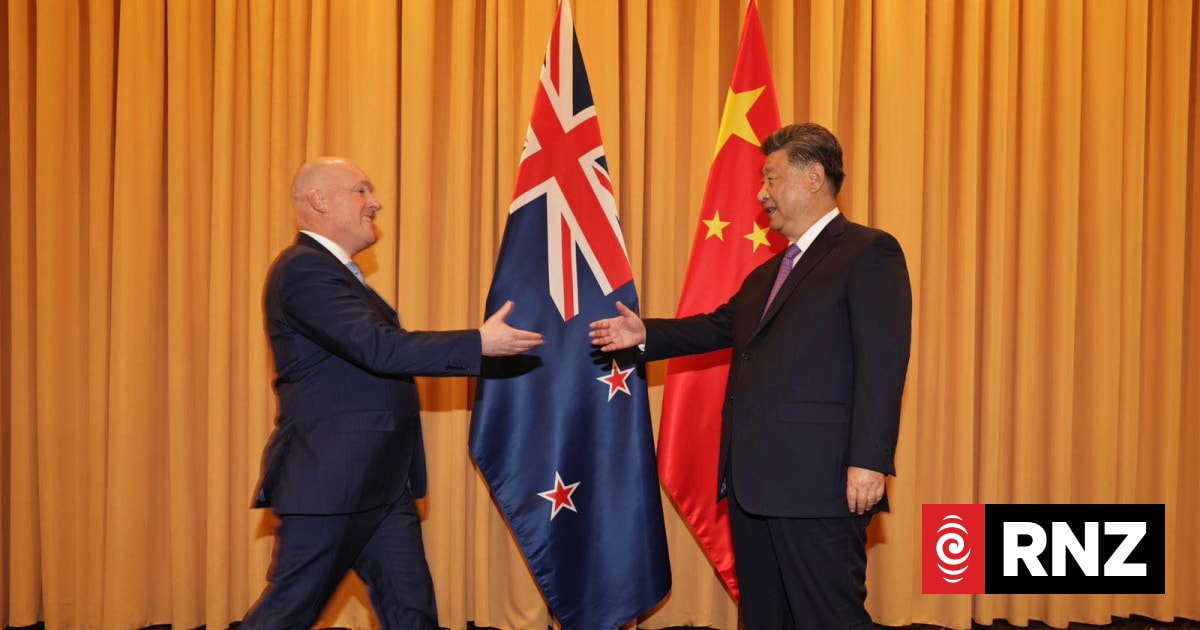
“I am not surprised if, for example, someone tells me that Prime Minister Luxon raised human rights issues, that he brought the issue up behind closed doors in his recent interactions with senior Chinese government official,” she says.
“Beijing is now used to that. That’s what they expect… so I think it’s incumbent on governments to stop and think whether what they’re doing is adequate, or whether it is in any way a deterrent.”
[…]
China is New Zealand’s largest trading partner - we sold them $20 billion worth of goods last year - and we have seen other countries punished economically for making political statements.
After the Nobel committee awarded Chinese dissident Liu Xiaobo the Peace Prize, Beijing banned Norwegian salmon for six years. When Australia called for an inquiry into the origins of Covid-19, Beijing slapped restrictions on sales of Australian beef, wine, barley and lobsters.
Richardson says people need to consider the economic relationship in a different way.
“We have to stop and think about the kind of economic activity that has helped make the Chinese government so affluent that it can commit crimes against humanity and get away with it, because it uses that kind of leverage over other governments or companies or sectors,” she says.
New Zealand can’t take on this issue alone, she says, but likeminded governments that say they’re concerned could work together and to try to recognise that human rights are foundational to predictable, healthy economic interactions over time.
[…]