
- cross-posted to:
- technology@lemmy.zip
You must log in or register to comment.
The modern incarnation of ‘Cable’ is HFC, Hybrid Fiber Coax, and has been for more than 3 decades, and being analogue fiber, technically has greater data carrying capacity than digital variants.
It really depends on how petulant you want to behave, and interfacing with anything that smells of a legal system is as efficient and effective as passing a MPEG2 stream through a HFC node.
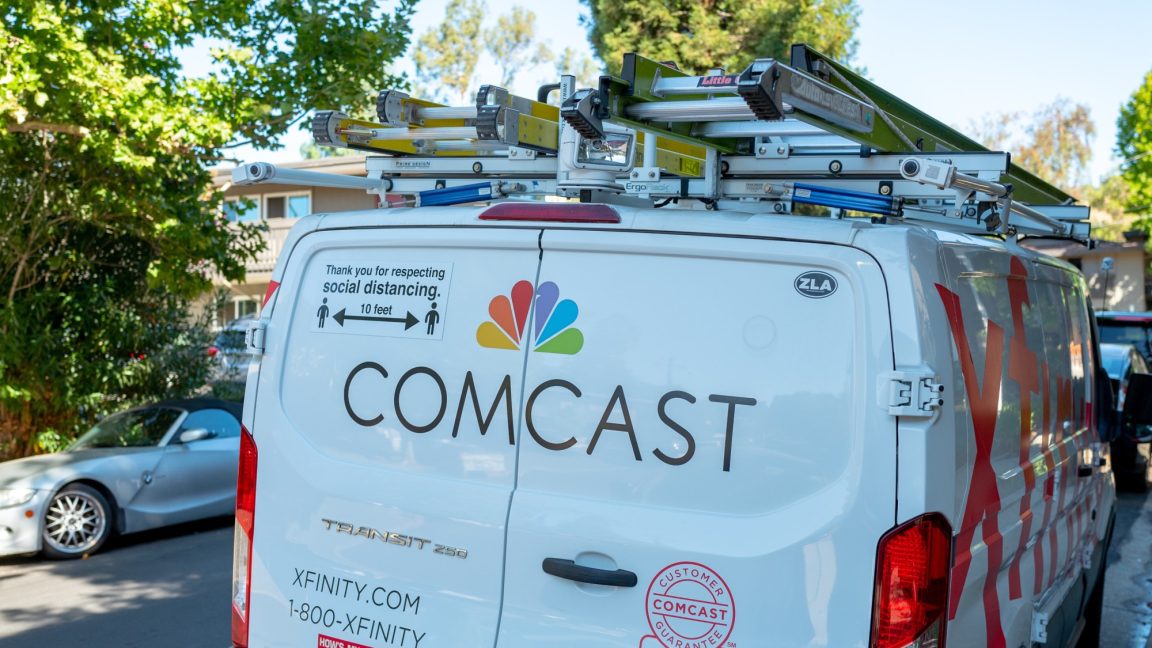
The internet backbone is fiber. Comcast and Spectrum advertise their cable networks as “fiber powered” to capitalize on the word “fiber” even though the local distribution is all cable. By that same logic, dial-up and LoRaWAN are fiber powered, too.
AT&T internet is expensive af and I’d never recommend it over competitors, but they are right here. It’s intentionally misleading to the point of false advertising.
AT&T will run a fiber line into your home that terminates at your router. These “fiber powered” networks won’t put fiber within miles of your home.
Except for nodes extremely close to a HFC hub or head end, the overwhelming majority of the distance traversed through a HFC plant is over literal, optical fiber strands, and with remote PHY equipment the footprint of glass is only expanding. Also, for RF clarity reasons, the termination of the fiber in the street is almost guaranteed to be under a mile from the modem in the premises.
Extending this to claim connections feeding an access network implies the same logic indicates a bad-faith argument.
I have no interest in the legal or marketing aspects of this discussion, but from a purely technical standpoint, it’s entirely accurate to claim that HFC truly is fiber powered, and given the analogue lasers involved, there’s a hell of a lot more power fed into those fiber strands.