I’m having a hard time sitting with the fact that Black people so frequently push for ideas and logic that are antithetical to understanding race and thereby antithetical to Black people truly being liberated.
I’m baffled by how Black people can make sweeping generalizations about “biracial” people and nobody will see anything wrong with it, e.g., “Biracial people aren’t Black because they have totally different experiences!”
Which ones!? Which “biracial people” are you talking about? Why are we taking a category of people who is so overwhelmingly and undeniably diverse and trying to reduce their presence in society down to a singular archetype that inherently erases the experiences of a multitude of people? How is it not obvious that this is extremely reductive?
This is why I say that Black people have an unhealthy relationship with race science, and it is a one-sided love. They love race science, but race science sure does not love us.
I never hear any actual arguments for this “Biracial people aren’t Black” nonsense. It’s always:
- A meaningless tautology being pushed as an irrefutable axiom of sorts, e.g., “Biracial people are biracial. Black people are Black.”
- Race essentialism; something about biracial people not having “pure DNA.” (It’s 2026, and many Black people still don’t know that race is a social construct. Geez.)
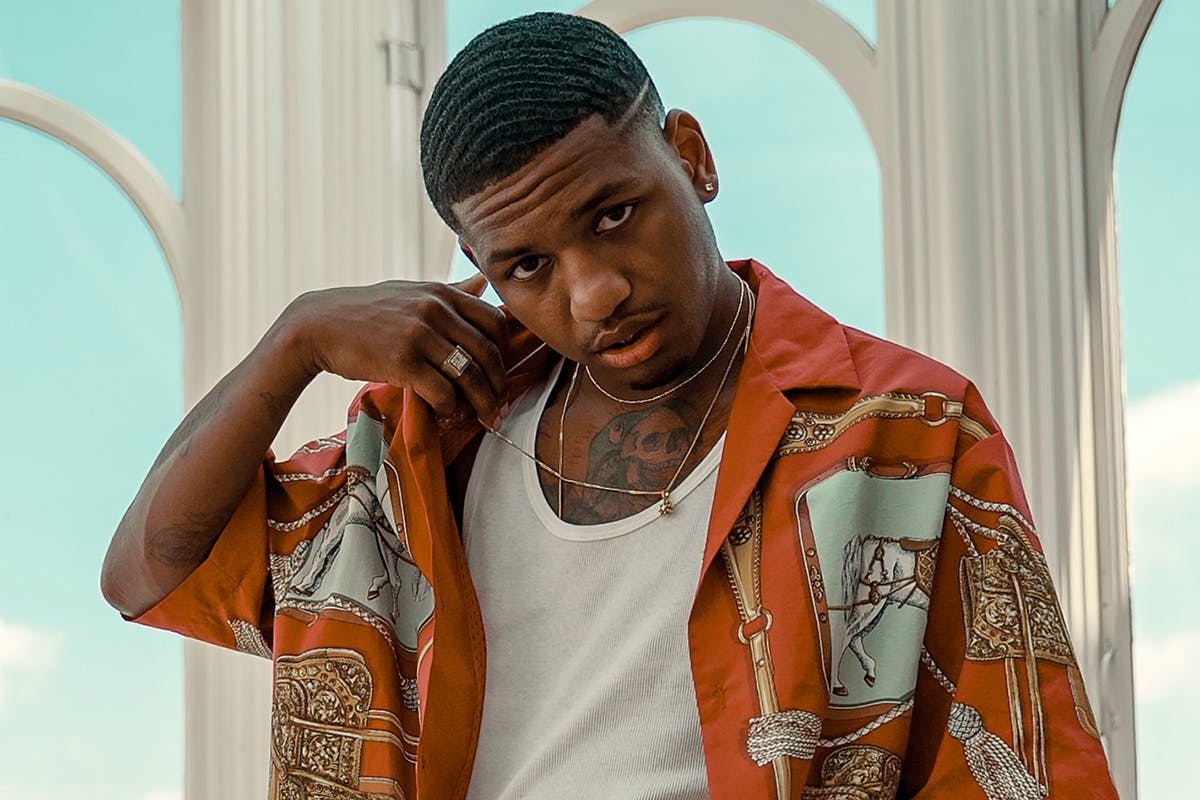
- Something that erroneously assumes that there is a universal “biracial experience.” By extension, people often assume that there is a singular “biracial phenotype,” but this man is “mixed,” this woman is “mixed,” and this man is “mixed,” so what the fuck are we talking about?
- A misinterpretation of the one-drop rule so that they can posture and pretend that biracial exclusion is about “rejecting the slavemaster’s ideas.” Accepting biracial people as Black is not the one-drop rule. It is not the one-drop rule to look at a person who is unambiguously Black in their appearance and assuming they are Black even though they might have one non-Black parent. What the one-drop rule would actually be like is a person who has blonde hair, blue eyes, and pale skin being considered “Black” socially and systemically, regardless of how they personally want to identify, just because we discover that they have 8% Wolof ancestry or something like that. Many people find it very much understandable when a white-passing biracial person does not identify as Black. The problem is that these people do not want to reject the one-drop rule’s problematic foundation: viewing race as a scientific, genetic, and biological thing. You cannot truly reject the “one-drop rule” without properly categorizing race first, and that’s why, ironically enough, many of these Black people are effectively engaging in an inverted one-drop rule.
And, to be clear, I am not saying I believe that all biracial people (with a Black parent) should identify as Black. My point is that the race essentialism that tries to enforce a strict, uniform “biracial” categorization needs to be rejected, period. Like I said, experience can vary from person to person, so if someone feels like their experience as a biracial person is not a Black one, and, for that reason, they do not feel like it is accurate for them to identify as Black, I understand.
However, when someone like me, who has called myself “Black” my whole life, is being told that I am somehow “not Black” because of my Trinidadian Dougla heritage, I have to sit and wonder, “Where the fuck are we? How did we get here?” It also shows how US-centric this thought process is. Most people in the US hear “biracial” and automatically assume “Black American mixed with white American.”
Speaking of Dougla heritage, by the way, something I find interesting is that I rarely see people “correcting” Black liberals trying to guilt-trip people and accuse them of misogynoir when they are screeching about people who did not vote for Kamala Harris. Though I have seen people deny Harris’ Blackness, it’s ironic how the race policing often stops when people need to fulfill a certain agenda that frames the electoral loss of a genocidal, neoliberal politician as being due to a “hatred of Black women.”
In fact, people tend to be selective about this shit overall. People will start saying “That’s it! We gotta exclude biracial people from Blackness altogether” when a racially ambiguous biracial person is expressing anti-Blackness on TikTok, but I rarely see people go out of their way to say that Bob Marley, Barack Obama, Beyoncé, J. Cole, Frederick Douglass, W. E. B. DuBois, Malcolm X, Amy Jacques Garvey, and Rosa Parks are “not Black.”
And, honestly, this is just me getting into one facet of Black reactionary thought that tends to LARPs as revolutionary.
Race essentialism is one problem and a huge one at that, but we also have cisheteropatriarchy, prejudice against non-Christians, ableism, and Black capitalism causing so many fucking issues as well.
I am very, very proud of my Blackness, but I’m gonna be honest with you: I often feel like I have a hard time associating with a lot of Black spaces and Black people due to these reactionary impulses.
Honestly, I gotta make it a goal to interact with Black people who genuinely understand Marxism, race, and revolutionary thought because whatever the fuck this is, I’m not taking it.
Stuart Hall had a timeless quote: “Race is the modality in which class is lived.” Race acts as this cypher for class issues that allows then to be centered in something other than class.
So my guess is, some black liberals bristle at the implication of the biracial construct because it creates a contradiction between the ethnic element and the race as class cypher element: having mixed ethnic background presents no contradiction on its own, but one can’t be of “mixed class.” So there’s an instinct of, shove the biracial person into one racial category or the other depending on perceived class aspects.
Of course, the perceived class aspects and actual class aspects don’t always align. Hence the arbitrariness of how mixed race people are categorized.

![[Rant, CW: Discussion of Race Essentialism] Nothing makes me realize just how reactionary the average Black mind can be like the biracial discourse](https://hexbear.net/pictrs/image/1931fafb-69ab-4831-8726-266d38f113a2.jpeg)