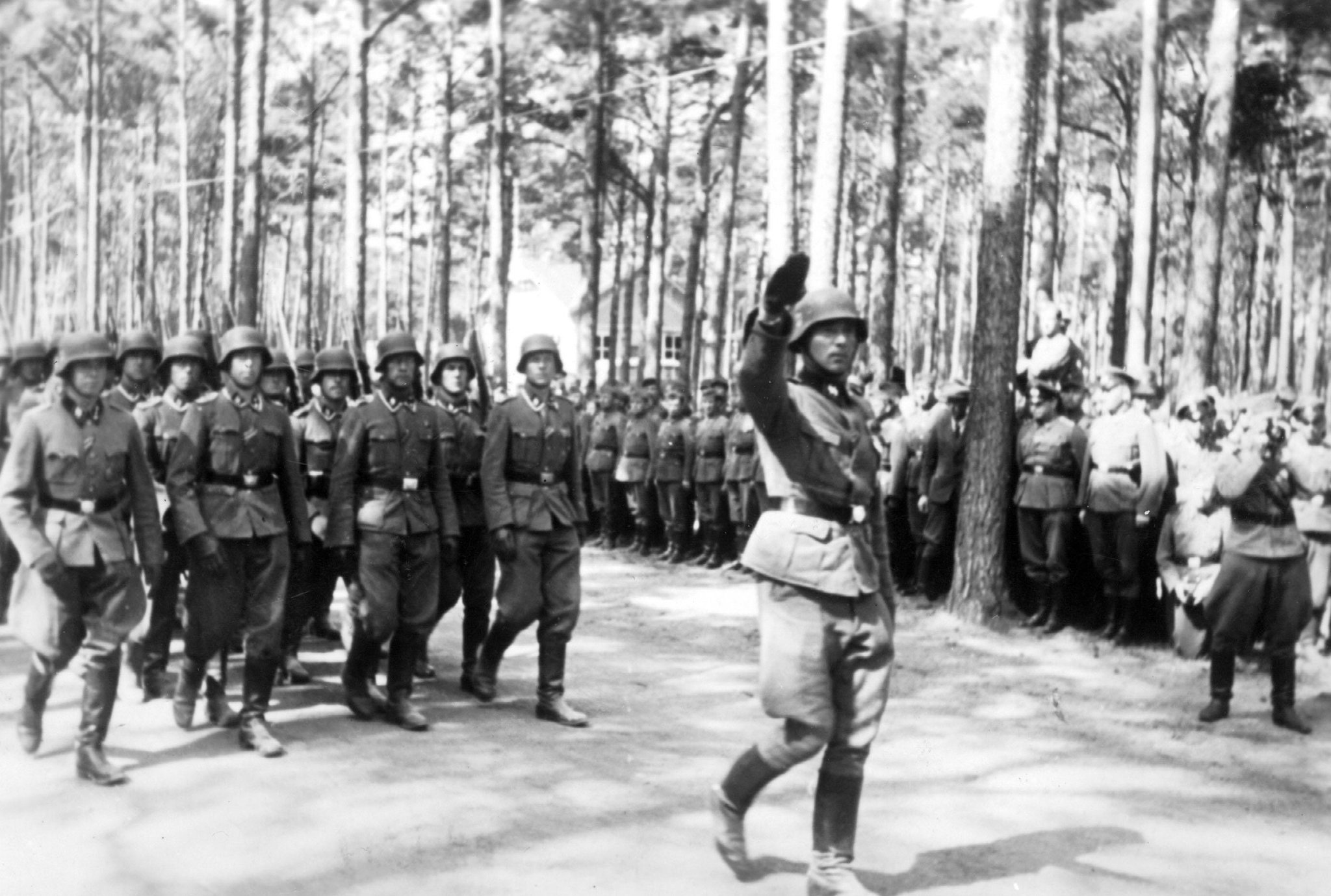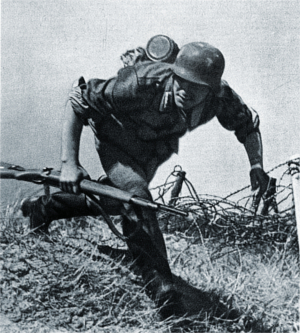
Quoting Michael Jonas in Finland in World War II: History, Memory, Interpretations, page 114:
Finland’s war effort, indeed its existence as a state, was intrinsically linked to Nazi Germany. “Without Germany’s strategic support and its massive deliveries of arms and food provisions,” Markku Jokisipilä has aptly stated the obvious, “it would have been impossible for Finland to wage war.”⁵¹
In the face of the close practical integration of the [Fascist] and Finnish war efforts and Finland’s increasing, in the end close to total war economic dependence on the Third Reich, the contemporary postulate of the Finnish government to have conducted an autonomous defensive war appears at any rate weakened, if not substantially invalidated.
Postwar and especially post‐Cold War interpretations of an almost identical kind, emphasizing the separate war thesis and shared by both the Finnish public and the country’s political élites, are to be seen as manifestations of the reorientation of Finnish foreign policy and its impact on Finnish self‐perception. Their scholarly and historiographical value is evidently limited.⁵²
[…]
The contemporary Finnish preference for a politically undefined relationship with [the Third Reich] should in any case not obscure the fact that Finland became rapidly—and knowingly so—an integral and indispensable part of a war coalition centered on Berlin. De facto the coordination of German and Finnish preparations for war appears often significantly more intense than in comparable cases of coalition warfare in the early phase of World War II.
As primary examples one could refer to Germany’s relations with the Soviet Union prior to [the invasion of] Poland and Berlin’s wary affairs with Italy in the run‐up to the offensive in the west; both were politically fixed through the [German–Soviet] Pact and the pathetically called Pact of Steel respectively, but did at no time possess a military dimension in terms of concrete preparations for war, as the German–Finnish–Romanian coalition triangle certainly did.⁵⁶
To view the Soviet [intervention in western Ukraine] on 17 September 1939 or the belated […] Italian entry into the war against France as military operations divorced from the original German–Polish and Franco‐German conflicts respectively would nonetheless seem grossly illogical.
As with the cited examples, Finland’s entry into the war, three days after the beginning of the offensive against the Soviet Union, is simply inconceivable without the [Fascist] precedence.
The lack of a contractually binding Finnish commitment, as it existed in the Romanian case in the form of the country’s accession to the so‐called Tripartite Pact, primarily relates to Helsinki’s deliberately cultivated reluctance, but can likewise be ascribed to Hitler’s obvious unwillingness to upgrade Finland to the status of an ally in the war against the Soviet Union; by doing so, he avoided the risk of seeing his own racially–ideologically motivated conception of a ruthlessly annihilationist and expansionist war in the east unnecessarily watered down, first and foremost by possible intervention from well‐meaning allies.⁵⁷
The Finnish entry into the war on the evening of 25 June 1941 has thus to be qualified as neither an exclusively reactive decision on the part of an otherwise peace‐desiring Finnish government nor the prelude to a separate war whose relation to the great power conflict and the [Fascist] offensive against the Soviet Union would have been entirely coincidental.⁵⁸
(Emphasis added.)
Any video I have seen with Simo Häyhä, or Lauri Törni they are acting like they were heroes. People actually believe Finland was too busy fighting Russia to do true Nazism in Finland and that Finland only worked with Nazi Germany to help stop a Russian invasion.