
- 212 Posts
- 1.75K Comments

Jesse what the fuck are you talking about
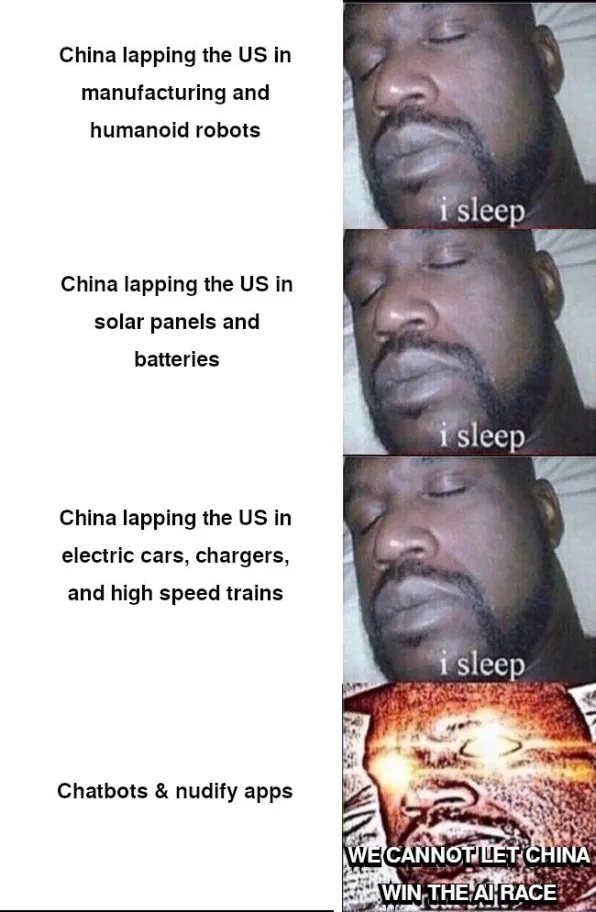
Respectfully, this site has a real problem with ‘claplause’ memes.
Claplause is a term I heard comedian Roy Wood Jr. use in an interview for when a comedian relies on saying things that are popular to get people to cheer and clap rather than things that are funny enough to make an audience laugh.
Israel is a genocidal apartheid state; Trump is a disgusting idiot racist serial sexual abuser; both parties in the US are functionally controlled by the same cohort of fascistic child molesting oligarchs; artificial intelligence is a golden calf worshiped by a doomsday cult that controls our economy; yes: we all know these things.
I want to be clear: as an anti-Zionist I am not offended by this meme because it critiques an ethno-supremacist police state. But I am tired of all the low-tier memes with no real joke.
Here is my constructive advice on making better memes:
Consider what the truth at the heart of a joke is, and make it something that really feels like it needs to be said. ‘Israel is a cancer’ is boring, because that’s not an edgy or unique take.
Take something timely, and say something about it. For example: take the weird liberal white-washing of Israeli fascism. Then find a good, moderately popular meme template. Add some meme-coded text like ‘When you doin’ a genocide but sprinkle some [pride flag emoji] on it’.
I’m not a big Iran-stan, but have you seen their Lego videos? Pretty dank. Try something like that.
This reminds me of the book “Democracy May Not Exist, but We’ll Miss It When it’s Gone”.

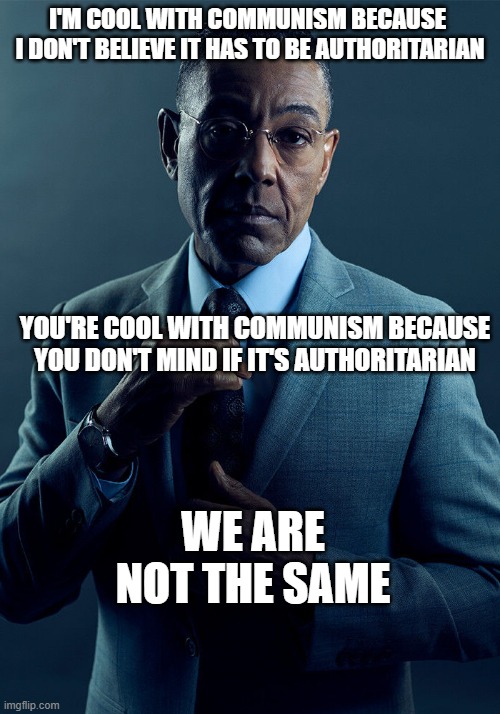
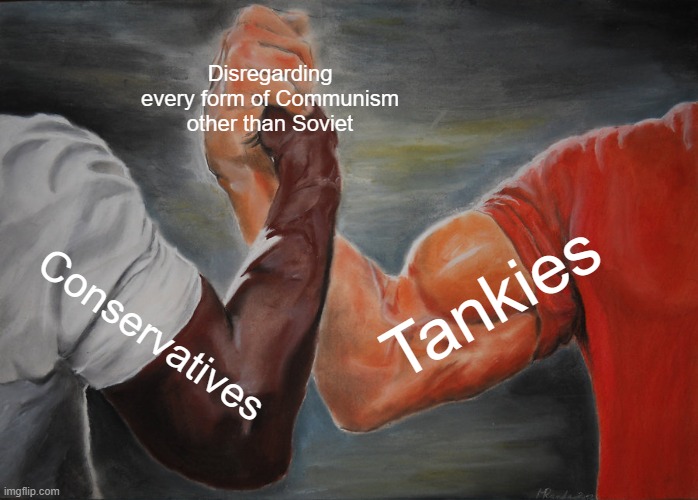
A Tankie is anyone who self-identifies as a Tankie.
I don’t apply the term to folks as insult, I’m just acknowledging people who choose to identify as such.
Honestly, that’s a great rule.
To answer your question, i don’t presume to have the singular correct strategy, but I personally believe the most sensible route out of capitalism is to build parallel structures at multiple levels: neighborhood mutual aid, community farms, county land banks, national single payer healthcare, etc.
I think that this will build an organizing structure and a vision for change, and by supporting more and more people we create conditions that free them from the coercive power of capitalism, which makes more radical actions like a general strike easier to sustain.
As more and more people withdraw from participating in capitalism, the tools of coercion will become increasingly direct, violent, and punitive, and revolution will take the form of a comiserately forceful refusal to submit.
What about now?
Honestly, I was just letting out my frustration with some folks in another comment section who were proudly insisting that I wasn’t a real enough leftist unless I simp for strongmen.
I’ll still march alongside you (and them too).
Did you already get through the whole thing?
If you’re impatient, the relevant section is on page 65.
Yep, I agree with all of that.
I’m not sure if you’re into this sort of thing, but I’m working with some friends on a tabletop game jam that we’re planning to run (online) over a weekend some time early next year about stories set in the midst of a future revolution. You can see the draft document into which we’ve been occasionally adding ideas here. Let me know if you’re interested.
Well, I’ll give you some nuance then:
You’re right. A revolution is not going to be bloodless. Use of force requires moral compromises, and we probably won’t get there with our hands clean.
But: I think there’s a big difference between the contradictions we struggle to navigate as we strive to build a world without masters, and the choice to enthusiastically hand unchecked power to “good” masters who we naively expect to treat us well even when we have no means to constrain them or impose accountability.
Put another way, I can tolerate grey areas we’re reluctantly forced into if our goals are anti-authoritarian, because I believe that such a project would have a good chance of reigning in those excesses. But if we accept and embrace domination from the start, the outcome is inevitably that we all wind up under a boot. Does that make sense?
I think we’re so far from that world that this is more a question of abstract philosophy than political theory. But for what it’s worth, I think these are the three most common answers to that question:
- We reach a state of automated post-scarcity in which we don’t need people to work;
- People work for the sake of personal satisfaction or community recognition or some other non-monetary reward;
- Goods and services are exchanged in a Gift Economy: people still get rewarded commiserate to their labor, but the exchange isn’t mediated through currency.
Personally, I don’t think it’s something that we need to figure out this decades or next.
First, regarding recommoning the means of production: it’s not a single discrete thing, but rather a collection of economic and political policies and approaches.
Look into is Solidarity Economies: this is a term that bundles together worker cooperatives, housing coops, public banks, credit unions, and all the other structures that allow groups of people to cut investors out of the critical institutions on which we rely.
As for the other part: progressive taxation is not authoritarian and does not require authoritarianism.
I think the problem I’m seeing is that you seem to be equating any use of force with authoritarianism.
You can have a revolution, restore the means of production to the commons, and then just not have a single-party state. You can deliberately distribute power among the working class. Use of force doesn’t require unchecked state power.
This is such a weird question.
How does this billionaire exist in this hypothetical communist society? And how do you expect them to buy up a business?
It’s these weird pointless thought exercises people keep throwing at me that drive me to make these posts.
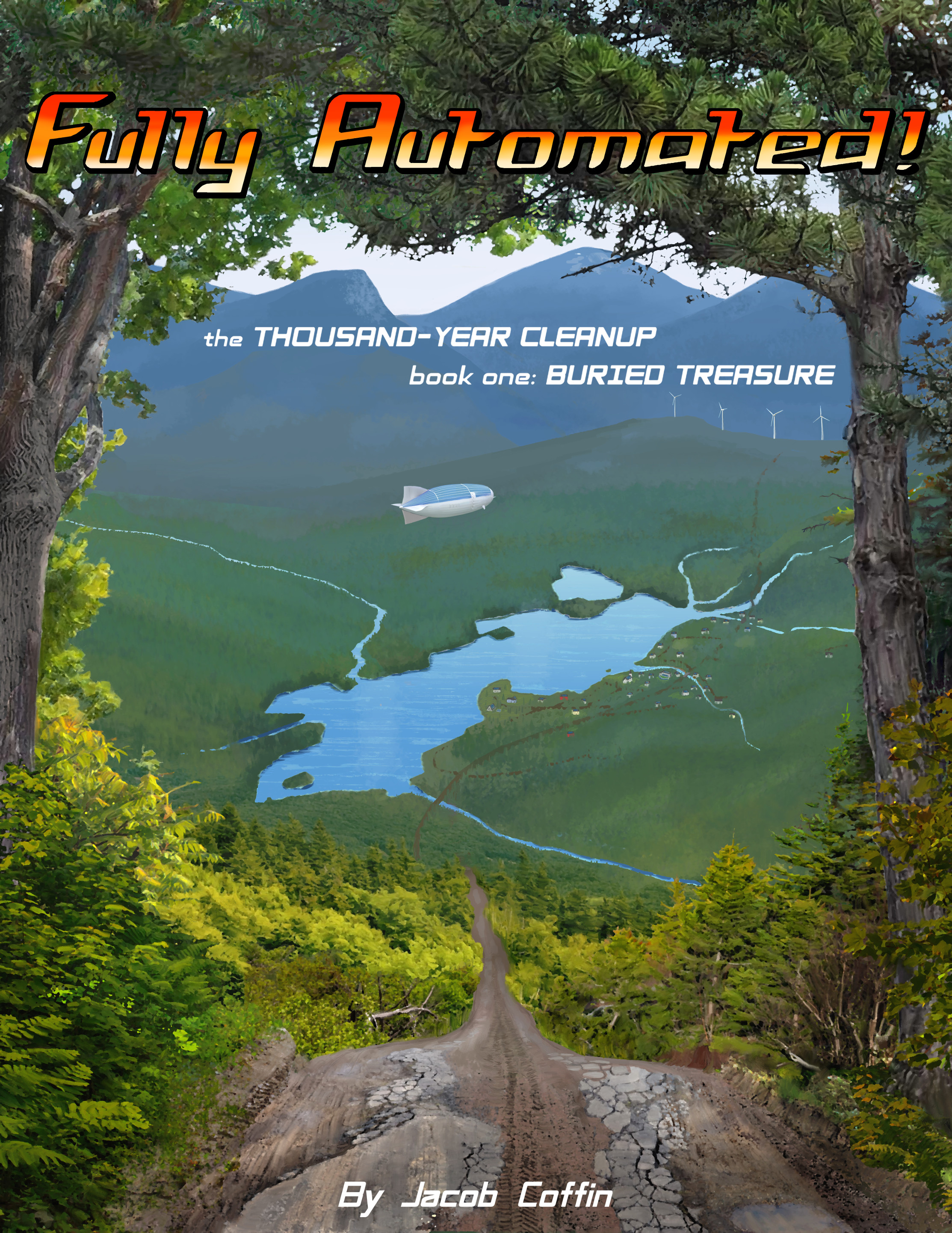
If you really want to know what my desired society looks like, it’s this solarpunk game my friends and I play: Fully Automated! Solarpunk RPG World Guide
Go read that, find all the stuff you don’t like in it, then write Substack article about it and don’t send me a link.
Agreed.
I feel like tossing out a thinkers’ weaker work is an act of charity.
I wouldn’t want anyone to hold up my dumbest takes after I’m dead. So when I say that I think that article is dumb and we should just pretend that Engels didn’t write it… I’m saying that as a compliment to Engels.
I can imagine that. I just read it and thought, ‘Geez… this is like a mid-tier reddit comment. It’s such flimsy strawman nonsense. Not his best work.’
I feel like anarchism is coming back into vogue. I’m not an anarchist myself, but despite scoffing at the concept years ago, I’m finding a lot more value in it as a school of thought than I once did.
 28·3 天前
I’d be angrier about this deal if I didn’t suspect that Trump tweeted this without any planning and when his flunkies try to act on it they’ll just get stuck asking Grok 'how do I import russian diesel" and never actually figure out how to do this.
I don’t know if this is a hot take, but I don’t think Trump’s administration knows how international business or oil shipping works. I legit don’t think they can figure out how to buy diesel from Russia.
Sixty percent of the time… it works everytime.








Rephrase?